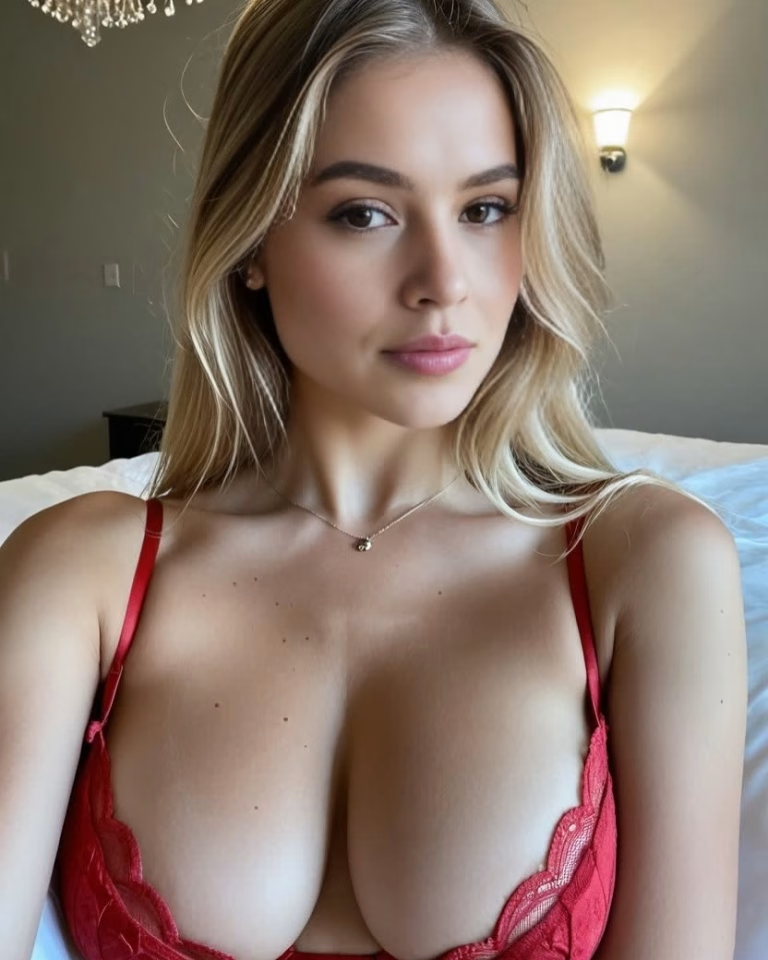
If you spend time on Instagram in 2025, you’ve probably scrolled past her feed — glossy fashion shots, magazine-ready closeups, and a signature wink that seems to say, “Look twice.” Meet Victoria Volsh: an eye-catching, curvy digital model who’s part art project, part advertising asset, and wholly a product of the virtual influencer era. Her account, @victoria_volsh, has grown into a lively hub of fashion-forward imagery and fan engagement — a sign of how social media’s notions of beauty, authenticity, and celebrity are shifting fast.

But Victoria is more than just pretty pictures. She’s an example of a larger cultural change: the rise of AI-generated and CGI influencers who are increasingly taken seriously by audiences and brands alike. Below, we’ll unpack who Victoria Volsh appears to be, why she matters, and what her existence tells us about the future of modeling, marketing, and digital identity. I’ll also place her in the broader landscape of virtual influencers — from pioneers like Lil Miquela to today’s AI-driven avatar startups — and touch on the ethical questions this new category raises.
Who is Victoria Volsh?
Victoria Volsh presents herself as a confident, glamorous, and curvy model on Instagram. Her feed features stylized fashion photography, beauty close-ups, and lifestyle scenes that look like they came straight out of a glossy magazine. The visual signature is consistent: perfect lighting, hyper-polished skin, and outfits that range from elegant eveningwear to modern swim looks — all curated to build a distinct persona and brand voice. Her Instagram profile name and posts are the clearest public anchors for her story.
Multiple online profiles and short biographies about Victoria treat her as a virtual / AI-generated model. That designation places her in the same family as other CGI influencers: characters that look and act like social media personalities but are created and controlled by teams of designers, animators, marketers, or AI systems. Video biographies and channel profiles repeatedly describe Victoria as a digital creation — a choice that shapes how audiences perceive her and how brands can use her. YouTube
What Makes Victoria Different?

There are many virtual influencers, but Victoria’s niche is straightforward: she leans into glamor and curvy body confidence. Where some virtual influencers adopt a cartoonish or highly stylized aesthetic, Victoria’s images aim for a glossy, editorial realism that makes viewers pause and question what they’re seeing. That tension — realistic but not quite human — is a central part of her appeal.
Key traits that define her presence:
-
Editorial polish: Posts feel magazine-grade, with controlled lighting, strong composition, and fashion-forward styling.
-
Curvy representation: Unlike many early CGI models that emphasized hyper-thin physiques, Victoria embraces space for fuller silhouettes — a deliberate positioning that taps into body-positive conversations.
-
Playable persona: Short captions and playful hooks like “look twice — I might wink back” create a flirtatious, interactive brand voice that invites engagement. Instagram
The Bigger Picture: Virtual Influencers Are a Growing Industry
Victoria Volsh didn’t appear in a vacuum. Virtual influencers have been on the rise for nearly a decade, with pioneers like Lil Miquela — who debuted in 2016 — establishing that digital personas can build real engagement and even land brand partnerships. Since then, the space has matured: agencies, fashion houses, and tech startups are investing in avatar-driven content, and analysts estimate the virtual influencer market will continue expanding as tools get cheaper and more powerful. Influencer Marketing Hub
Recent industry write-ups and reports point to a mainstreaming of the format. In 2025 coverage, commentators note that virtual influencers now offer scalable, controllable spokespeople for campaigns — they don’t need flights, fittings, or downtime — and advances in generative AI are making lifelike avatars both cheaper and faster to create. Startups are even raising funding specifically to scale avatar production for brands and entertainment projects, signaling investor confidence that this is more than a passing trend. Business Insider
Why Brands and Creators Are Interested
Virtual models like Victoria offer several clear business advantages:
-
Control and predictability: Brands can script everything a virtual influencer says and does, avoiding PR surprises that come with human talent.
-
Creative freedom: Designers can push the aesthetic envelope without practical constraints — outfits that would be impossible in the real world, dramatic visual effects, or staged fantasy shoots.
-
Scalability: Once the character exists, producing new content can be faster than arranging physical shoots.
-
Novelty and shareability: Audiences are curious about the blurred line between real and synthetic — content that generates conversation often performs well on social platforms. Metricool
Victoria’s brand — glamorous, bold, and deliberately “made” — fits this model. Her feed acts like a living lookbook that brands could, in theory, license or collaborate with to promote fashion, beauty, or digital goods.
The Ethical and Cultural Questions

The popularity of virtual influencers brings real debate. Some of the hot-button issues include:
-
Transparency: Should virtual influencers always disclose that they are not human? Most platforms and many creators favor transparency, but ambiguity can be used intentionally as part of storytelling. Critics argue ambiguity invites manipulation. ScienceDirect
-
Authenticity and trust: Fans often form emotional bonds with influencers. Is it right to build trust with a persona that’s ultimately scripted? When creators use virtual influencers in sensitive messaging, backlash can be swift — even veteran virtual personalities have faced criticism for campaigns that felt exploitative. A recent controversy around a prominent CGI influencer’s health-related post shows how fraught this terrain can be. People.com
-
Labor and creative credit: Virtual influencers are often built by teams — animators, writers, marketers — whose contributions can be obscured. The question of credit and compensation for the real creators behind a digital face is an evolving conversation.
-
Representation and bias: If AI is trained on narrow beauty standards, virtual models risk amplifying those biases. On the other hand, thoughtfully designed digital characters can increase visible diversity if creators prioritize it. WGSN
Victoria Volsh’s curvier image is worth noting here: in a field that historically skewed thin and Eurocentric, a virtual persona embracing fuller shapes can be a positive corrective — if it’s handled responsibly and not used merely as an aesthetic novelty.
What the Future Might Hold
If current trends continue, we can expect to see more integration between virtual models and commercial ecosystems:
-
Virtual runway shows and digital wardrobes (digital clothing and wearables for the metaverse).
-
Hybrid campaigns where human and virtual talent share billing in ads and editorials.
-
AI-driven engagement — avatars that can answer DMs, take part in live streams, or dynamically adapt content to audiences.
-
Cross-platform IP — virtual personalities moving from Instagram to games, virtual concerts, or even scripted entertainment projects. Business Insider
Victoria Volsh sits at the intersection of these possibilities: a visually arresting face that already functions like a media property more than a personal diary. Whether she becomes a mainstream commercial star or remains a cult favorite, her existence is a useful case study in how fashion and tech are merging.
Final Thoughts
Victoria Volsh is, fundamentally, a signal: digital creation is now a legitimate channel for cultural expression and brand storytelling. She reveals how audiences are open to new forms of charisma — and how companies can use technology to craft personalities for marketing and entertainment. But with opportunity comes responsibility. Transparency, artistic credit, and ethical use must guide this new chapter if virtual influencers are to add value rather than confusion.
If you’re fascinated by the future of fashion, marketing, or digital art, keep watching accounts like @victoria_volsh — they’re the first drafts of how we’ll experience style, celebrity, and identity in the years ahead.
Read More:
Introduction: The Rise of Claire Blue
Bella Hill (@bellahi99): De TikTok a vocera del body positivity