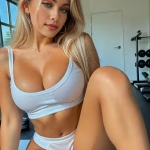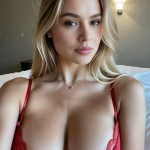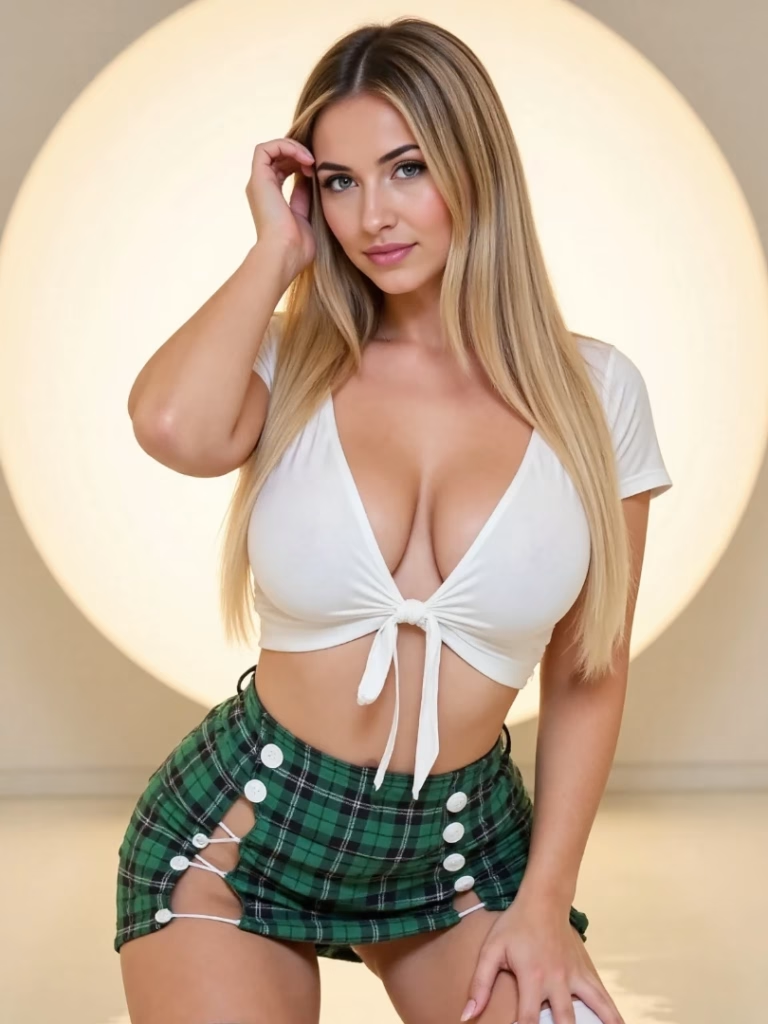
In an era where filters, CGI, and generative AI blur the line between “real” and “rendered,” Lexy Storm has quietly emerged as one of the most eye-catching examples of a new kind of influencer: the AI model. Sleek visuals, cinematic lighting, and carefully curated mystique make her feed scroll-stopping—but Lexy’s importance goes beyond aesthetics. She’s part of a larger conversation about creativity, authenticity, branding, and the future of beauty itself. Below I’ve pulled together an in-depth look at who Lexy Storm is, how AI models work, why brands use them, and what this all means for the beauty world—with up-to-date examples and sources.
Who is Lexy Storm?

Lexy Storm presents herself as a virtual influencer on Instagram under the handle @lexy.storms. Her grid is a consistent mood board: glossy portraits, fashion-forward styling, and short reels that emphasize movement and emotion rather than candid reality. Her posts frequently include tags and partnerships with AI- and model-related accounts, signaling that she’s positioned as a deliberately digital persona rather than a human creator. Instagram
That curated mystery is part of the appeal. Lexy’s captions and bio lean into an enigmatic, glamorous identity—a “character” designed to be admired, to inspire fashion and beauty choices, and to spark conversation about what digital beauty can be.
How is an AI model like Lexy created?
There isn’t a single recipe— “AI model” covers a range of techniques—but most virtual influencers are produced using combinations of the following:
-
Generative image models and neural rendering: advanced machine learning (e.g., diffusion models) can produce photorealistic faces and textures.
-
3D modeling and rendering: artists build a 3D character and render photorealistic images or animations with realistic lighting and hair simulation.
-
Compositing and post-production: the final images are often refined in Photoshop or video-editing software to match a brand’s aesthetic and cross-platform needs.
The result is a persona that can be posed infinitely, styled instantly, and inserted into campaigns or narratives without the logistical constraints of human shoots. Lexy’s feed demonstrates that mix: digital polish with editorial sensibility. YouTube
Why do brands and creators make virtual influencers?
Brands experiment with virtual influencers for three major reasons:
-
Total creative control. Virtual characters behave exactly as their creators intend—no off-message interviews, no scheduling conflicts. This control is part of the reason luxury and beauty brands experiment with virtual faces. wearetechwomen.com
-
Scalability and novelty. A virtual influencer can appear in multiple global campaigns simultaneously and can be adapted rapidly to trends, seasons, or product lines.
-
Audience engagement and storytelling. Well-crafted virtual personalities can spark strong engagement and act as long-term brand characters—but crucially, only when they’re backed by good storytelling. Virtual influencers without a coherent narrative can feel hollow. virtualhumans.org
Lexy’s output—consistent aesthetic, recurring motifs, and short-form reels—reads like a carefully managed brand asset designed to do exactly this: inspire, engage, and be easily repurposed across campaigns. Instagram
The ethical and regulatory landscape: what creators and brands must consider

Virtual influencers bring creative opportunity—and ethical questions. Regulators and industry bodies are already catching up:
-
Disclosure & endorsements. The U.S. Federal Trade Commission and advertising regulators have made it clear that virtual influencers count as “endorsers” when they promote products; this implies that campaigns need transparency and labeling to avoid misleading consumers. Lexology
-
Authenticity & mental health. There’s an ongoing debate about whether hyper-polished, idealized digital faces worsen beauty standards or distort expectations, especially among younger audiences. Virtual influencers can be weaponized to push unattainable ideals unless brands commit to responsible storytelling and context. wearetechwomen.com
-
Authorship & consent. Who “owns” the persona, and what rights do developers, artists, and collaborating talent have? These are active legal and ethical questions as virtual personas move into licensing, merchandising, and interactive experiences. (See broader industry papers and guidance on virtual character deployment.) Harvard Business Review
For creators running virtual accounts—including those who produce Lexy-style content—it’s critical to plan disclosures, maintain ethical standards, and consider long-term impacts on audience trust.
What makes Lexy Storm stand out?
There are many virtual faces online, but Lexy is notable for a few reasons:
-
A consistent, high-gloss aesthetic: her images read like editorial stills, not throwaway social clips—this positions her as a fashion/beauty muse rather than a meme. Instagram
-
Engagement-focused short-form content: Lexy’s reels emphasize motion, sparkle, and small storytelling beats, which helps create parasocial attachment—followers don’t just admire a picture; they feel like they’re following a story.
-
Strategic tagging and partnerships: tags such as
@ai_beauty_redefinedand collaborations with AI-model hubs suggest Lexy’s creators are actively positioning her within the AI-beauty ecosystem, not just as an isolated experiment.
These elements combine to create a believable, repeatable brand—the exact mix that makes virtual influencers attractive to marketing teams.
What the rise of Lexy Storm-style personas means for beauty creators

If you’re a makeup artist, content creator, stylist, or brand, this trend creates both a threat and an opportunity:
-
Opportunity: Virtual characters can be co-created alongside human talent. Think digital lookbooks, AR try-on experiences, and collaborations where a human artist’s signature style is translated to a virtual face—broadening reach with less production overhead. NIM e.V.
-
Threat: If audiences gravitate to perfectly curated digital personas and brands exhaust that novelty quickly, human creators must double down on what machines can’t replicate—vulnerability, lived experience, and authentic storytelling.
The winners will be the creators and brands that blend the strengths of both worlds. Use AI for scale and spectacle, but anchor it to human storytelling that audiences can emotionally relate to. virtualhumans.org
Looking ahead: Lexy and the future of digital glam
Lexy Storm is a snapshot of where we are now: technically advanced, visually compelling, and culturally provocative. But several near-term developments could shift the landscape even more dramatically:
-
AR/VR appearances. Expect virtual influencers to appear in immersive fashion shows or virtual storefronts where users can interact with or style a digital persona in real time.
-
Interactive narratives. Instead of passive posts, future virtual influencers may host live events, co-create with fans, or adapt personalities based on audience feedback.
-
Hybrid collaborations. The most powerful campaigns will likely pair digital faces with human creators—a human artistic director and virtual model combo that leverages the best of both.
Lexy isn’t the final form of the virtual influencer—she’s one of many experiments teaching brands how audiences respond to beauty without a human body attached. As tools improve and norms evolve, expect more lifelike interactions and higher creative standards. YouTube
Final thoughts: should the beauty world be worried — or excited?
Both. Virtual influencers like Lexy Storm are exciting because they expand creative possibilities: flawless editorial campaigns, instantly global ambassadors, and novel storytelling forms. But they also force a reckoning about authenticity, representation, and the responsibilities of creators and brands.
For Glam Beauty Vibes readers, the takeaway is practical: learn the technology, experiment with responsible storytelling, and always prioritize transparency. Use virtual models to amplify creativity—not to replace the messy, human stories that make beauty meaningful.
Read More:
Emma Louise (Emxllouise): The Aussie Creator Blending Cosplay, Confidence & Clever Business
Kathi Blonde: The AI-Generated Nordic Model Redefining Digital Fashion
Rihanna Turns Up the Glam After Romantic Dinner with A$AP Rocky in Cannes