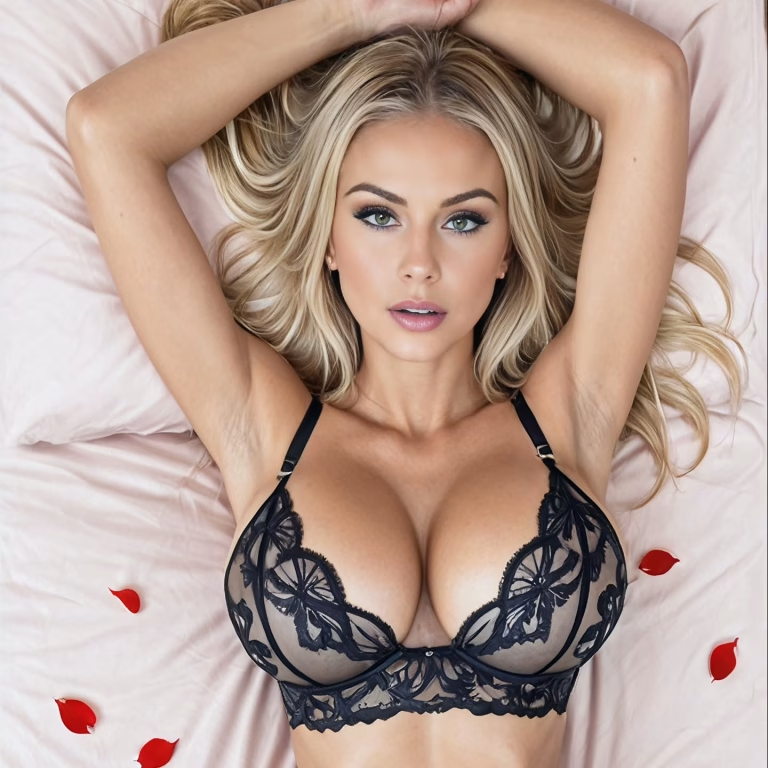
If you’ve been scrolling Instagram lately, you’ve probably seen those impossibly polished faces and outfits that look like they were lifted straight from a fashion mag — except the person in the frame isn’t exactly “real.” Meet Evelyn Lainee XO, an AI-generated model who’s been quietly building a stylish presence on social media and joining a movement that’s changing how brands, creators, and audiences think about beauty and influence.
Evelyn’s profile gives a clear sense of what she is: a stylized, camera-ready virtual persona with a clear attitude and aesthetic. Her Instagram account — @evelynlainee.xo — shows consistent editorial imagery, short reels, and punchy captions like “Sweet on the outside… Dangerously juicy inside,” that pair glamour with a little bite. The account has attracted a sizable following, and the feed reads like a fast-moving lookbook that’s meant to inspire, provoke, and sell a mood as much as a product. Instagram

What is a virtual (or AI) model — and why are they suddenly everywhere?
Virtual influencers are digital personas created with CGI, generative AI, or a mix of design + creative direction. They behave like human influencers: they post photos, create short videos, partner with brands, and build narratives that followers can engage with. But unlike human creators, virtual models are fully controllable by their teams. That control is hugely attractive to brands: a virtual persona doesn’t miss a shoot, can wear any look, and (in theory) won’t get embroiled in the messy real-life scandals human influencers sometimes do.
The trend didn’t start with Evelyn. The concept became mainstream after profiles such as Lil Miquela used Instagram to show how a “digital person” could attract mass attention and even land fashion collaborations. These pioneers helped push the industry from novelty into something brands began to seriously consider. Vogue documented this early wave and showed how digital simulations can become culturally relevant, not just visually arresting. Vogue
Numbers that matter: the rise of a market
This is not just a social-media fad. Market research shows the virtual-influencer economy is expanding quickly. Recent industry estimates place the global virtual influencer market at several billion dollars in the mid-2020s and project strong growth through the decade as brands keep experimenting with AI-driven campaigns. Major market analysts forecast significant CAGR rates as more companies — across fashion, gaming, beauty, and tech — add virtual talent to their marketing mixes. Those market projections explain why more teams are investing in high-quality virtual talent like Evelyn: the opportunity to scale creative work while tightly controlling brand alignment is a commercial win. Grand View Research
Beyond raw market size, consumer research suggests real appetite: surveys from influencer marketing specialists show that a good fraction of social users already follow at least one virtual influencer, and that storytelling, aesthetics and aspirational content are key reasons followers engage. In short: people will follow a convincing story and gorgeous visuals, regardless of whether the face in the photo was born in a studio or generated by code. Influencer Marketing Factory
What Evelyn is doing differently

Evelyn’s feed mixes fashion poses, beauty closeups, and short reels that capture mood rather than just product placement. That stylistic choice places her between a fashion muse and a lifestyle influencer — she’s not trying to be a real person’s diary; she’s a consistent, curated aesthetic. That’s powerful for marketing and creative collaborations because her “brand” is easy to align to product campaigns, moodboards, or runway concepts.
Because Evelyn is a virtual model, her creators can rapidly prototype looks, edit lighting and faces, and produce high-quality assets without booking a studio or a human model. That makes projects faster and sometimes cheaper. It also lets teams push the creative envelope: extreme color palettes, surreal backdrops, or hyper-stylized fashion montages that would be expensive, dangerous, or impossible in the physical world become routine. Her content is built to be shareable and clickable — which is exactly what drives visibility on Instagram and YouTube. Instagram
The creative and commercial appeal — plus the ethical debates
Brands love virtual influencers for a straightforward reason: control. Virtual personas can be scripted, styled, and scheduled exactly as a brand needs. Fashion houses have experimented with digital avatars during shows and campaigns, and performance metrics sometimes rival those of their human counterparts. But this control runs up against ethical and creative questions. Where does authenticity begin and end? Should a fictional character ever be used to tell stories about real human struggles — especially sensitive topics? Recent controversies — for example with other high-profile virtual influencers — show that audiences can react strongly if they feel a story is exploitative or deceptive. The backlash to certain AI-led campaigns reminds creators that realism without transparency can feel manipulative. People.com
Why the U.S. audience should care
For American audiences — particularly those into fashion, tech, and social trends — Evelyn and models like her are a live example of how culture and commerce are fusing with technology. U.S. brands are among the biggest investors in influencer marketing globally, and the U.S. audience’s appetite for aspirational content and storytelling makes the market fertile for virtual creators. Whether you’re a marketer, a designer, or simply someone who loves fashion, virtual models present opportunities: new campaign formats, 24/7 global launch capability, and creative freedom to experiment with narrative and visuals.
At the same time, American consumers expect transparency and values from influencers and brands. Successful virtual influencers balance spectacle with ethical clarity: stating that they are digital creations, partnering responsibly, and avoiding appropriation or insensitive storytelling. When done well, these models can amplify creative campaigns in ways real models cannot easily do. When done poorly, audiences push back. Those tensions are part of the growing pains for this new creative category.
Other U.S.-based AI Models people also search:
Victoria Volsh: The Virtual Model Redefining Beauty, Fashion
Yara Maiaccess — The Virtual Diva Rewriting What It Means to Be a Model
Sierra Vexley: The Virtual Model Redefining Beauty in the Age of AI
Practical uses — where brands are already using virtual models
-
Campaigns & Lookbooks: Virtual models can wear multiple designer looks in a single day without fittings or travel — ideal for seasonal drops.
-
Product Visualisation: Beauty brands can test shades, textures, and lighting on a virtual face before manufacturing.
-
Interactive Content: Virtual talent can appear in AR filters, metaverse showrooms, or even live virtual events.
-
Global Rollouts: A virtual model can be localized (hair, styling, language) to target different markets while retaining a single brand identity.

A quick look ahead
Expect more hybrid approaches: human influencers + virtual co-stars, AR experiences where followers “try on” the looks their virtual icon wears, and deeper storytelling that ties an AI model to a serialized narrative (think episodic reels or a fashion-forward web series). The creative limit today is largely imagination + ethical guardrails. As the tech improves, so will the nuance: better facial animation, more lifelike gestures, and smarter storytelling that can adapt content for different platforms automatically.
Final thoughts
Evelyn Lainee XO is part of a fast-moving wave in digital culture — a polished example of what fashion, technology, and storytelling can look like when they intersect. Whether you find the idea thrilling or unsettling, one thing is clear: virtual influencers are not a niche experiment anymore. They’re a commercial and creative category that brands and audiences are taking seriously.
If you want to explore Evelyn’s work, follow @evelynlainee.xo on Instagram for a lookbook of her most recent editorial shots and short reels. And if you’re a creator, a brand manager, or a curious fan, keep an eye on how these digital personas evolve — because their next campaign might just set the tone for the season.