Last updated: September 2026
Instagram vs. TikTok—which platform actually pays models more in 2026? Real brand deal rates, platform payouts, and case studies compared in depth.
I’ve spent enough time pulling apart creator rate cards and platform payout structures to know the honest answer to “which platform pays more” is the one nobody wants to hear: it depends on what stage of career you’re at. But “it depends” isn’t useful on its own, so this article does the actual math—real rate ranges, real payout structures, and real examples of what specific creators have reportedly earned on each platform—so you can see exactly where the money comes from and why the two platforms behave so differently.
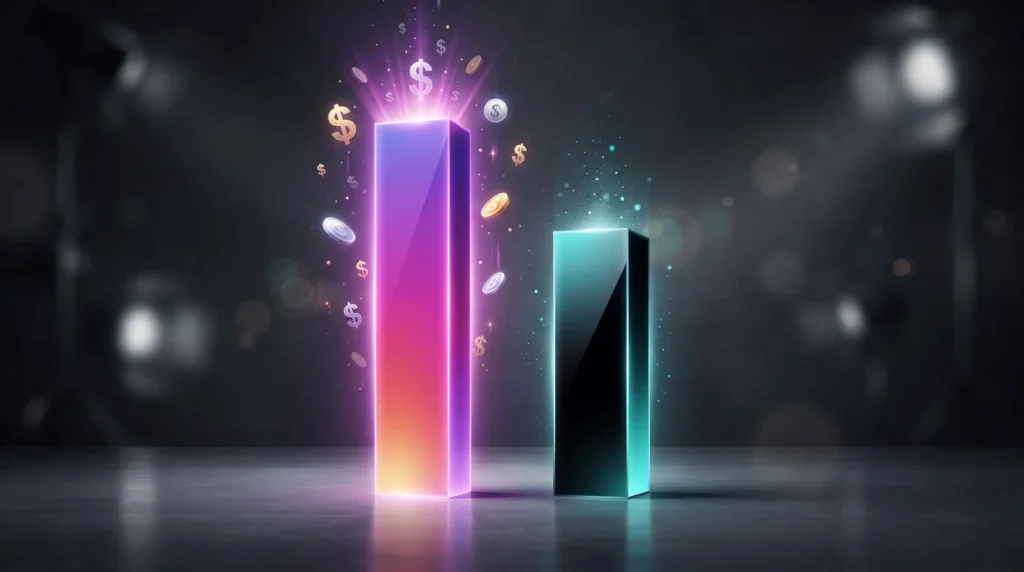
If you’re a model deciding where to put your energy, or a brand trying to figure out where your budget goes further, the short version is this: Instagram pays more per follower once you’re established. TikTok gets you discovered faster. Everything below explains why, with numbers.
Quick Answer
| TikTok | ||
|---|---|---|
| Sponsorship rate per 1,000 followers | $10–$25 | $5–$15 |
| Platform payout per 1,000 views | $0.50–$2.50 (Reels Bonus, invite-only) | $0.40–$1.00 (Creator Rewards) |
| Average engagement rate | 0.5%–1.7% | 2.8%–3.7% |
| Where brand budgets are going in 2026 | 64% of one major agency’s brand deals | 14% of the same agency’s deals |
| Best for | Converting an audience into paid income | Getting discovered from zero |
Sources for the figures above are cited throughout the article below.
Why Instagram Pays More Per Follower
This is the part most “Instagram vs TikTok” articles gloss over, so let’s actually explain the mechanism instead of just stating the number.
Instagram sponsorship rates run $10–$25 per 1,000 followers, compared to TikTok’s $5–$15 for a comparable deal—a 40–70% premium for the same audience size. That gap isn’t random. A few structural reasons drive it:
- Format flexibility. A single Instagram deal can bundle a Reel, a carousel post, and Stories into one package—brands are effectively buying three touchpoints, not one. TikTok deals are almost always a single video.
- Shopping integration. Instagram’s native shopping tags let a sponsored post drive a purchase without the user leaving the app. TikTok Shop has narrowed this gap significantly, but Instagram’s e-commerce tooling is more mature and more trusted by larger brands.
- Audience purchasing power. Instagram still skews toward an older, higher-income user base than TikTok, which matters a lot for brands selling anything above impulse-buy price points—think skincare lines, fashion, supplements, anything a model would typically promote.
- Where the ad budgets are actually going. One talent agency’s internal 2026 numbers showed 64% of the brand partnerships it managed went through Instagram, versus just 14% through TikTok. That’s not a small tilt—that’s brands voting with their budgets, repeatedly, campaign after campaign.
Why TikTok Still Wins on Growth and Discovery
None of that means TikTok is the “worse” platform—it just plays a different role in a model’s career.
TikTok’s average engagement rate runs 2.8%–3.7%, compared to Instagram’s 0.5%–1.7%. That’s not a small difference—it’s roughly 3–5x. The reason is baked into how the apps work: TikTok’s algorithm pushes content to people who’ve never followed you, by default, based purely on whether the content performs. Instagram increasingly does this too through Reels, but its core feed logic still leans more heavily on existing follower relationships.
Practically, that means a model with a modest following can post one video that reaches hundreds of thousands of new people on TikTok in a way that’s much harder to replicate cold on Instagram. This is why the 2026 data shows something that looks almost contradictory at first: TikTok’s branded-content deal volume grew 90% year over year, and creators with at least 50,000 followers saw their monthly earnings jump 40%—even while Instagram still pays more per deal. TikTok isn’t winning on rate. It’s winning on volume of opportunity, especially for creators who haven’t broken into the top tier yet.
There’s also a meaningful split by income level worth calling out directly: among creators earning more than $250,000 a year, 60% named Instagram as their primary platform versus 30% for TikTok. That’s the clearest signal in the data—TikTok is where careers start; Instagram is where they get monetized at scale.
Platform Payouts: Instagram Reels Bonus vs TikTok Creator Rewards
Brand deals are the bigger income driver for most models, but it’s worth understanding the platforms’ own payout programs too, since they function very differently:
- Instagram Reels Bonus: pays roughly $0.50–$2.50 per 1,000 views, but it’s invite-only, and availability varies heavily by region—many creators never get access to it at all.
- TikTok Creator Rewards Program: pays roughly $0.40–$1.00 per 1,000 qualified views, but it’s more broadly accessible and has clearer qualification thresholds.
Neither program is a real income floor on its own—they’re a supplement. For almost every model with a real following, brand partnerships dwarf platform payout income. Treat these numbers as a nice bonus on top of a video that was already going to perform well, not a strategy in themselves.
Real-World Examples: What Creators Have Actually Reportedly Earned
Exact personal income figures are almost never officially confirmed—creators don’t publish tax returns—but a few widely cited, methodology-transparent estimates give a useful sense of scale across tiers. These come from Influencer Marketing Hub’s ongoing rate tracking and separate industry rate studies and are explicitly labeled as estimates by those sources, which is the right way to treat them here too.
- Addison Rae—estimated per-post Instagram earnings in the $79,000–$132,000 range at peak reach, alongside separately reported TikTok earnings of around $5 million in a single year, illustrating how a creator can monetize the same fame very differently across the two platforms.
- Khaby Lame—among the highest estimated per-post Instagram earners, in the $85,000–$142,000 range, despite building his original fame almost entirely on TikTok’s discovery algorithm—a clean example of “grow on TikTok, cash in on Instagram.”
- James Charles—reported TikTok sponsored-post earnings up to roughly $36,200, compared to an estimated $76,785 for a comparable sponsored Instagram post—a gap of more than 2x for what is functionally similar content, mirroring the platform-level rate gap almost exactly.
The pattern across all three: whatever the platform-level averages predict, the individual numbers tend to confirm. Instagram consistently out-earns TikTok per post once a creator has genuine leverage, even for people whose fame originated entirely on TikTok.
What This Means If You’re a Model Building Your Career

Here’s my honest read, after going through all of this data rather than just the headline stats:
If you’re just starting out, don’t skip TikTok to chase Instagram’s higher rates — you’ll likely never get discovered fast enough to earn those higher rates in the first place. TikTok’s cold-audience reach is genuinely valuable early on, even though the per-post pay is lower. Getting found matters more than getting paid at this stage.
If you already have a following, this is where the strategy should flip. Use TikTok content to keep growing reach, but push serious brand conversations toward Instagram—that’s where the shopping tools, the format flexibility, and the buyer-intent audience actually live. The data backs this up bluntly: creators earning over $250K a year overwhelmingly point to Instagram as their main platform, not TikTok.
Either way, don’t rely on platform payouts as a real income plan. Reels Bonus and Creator Rewards are nice-to-haves, not strategies—the real money is in brand partnerships, and increasingly, in owning a direct income stream (subscriptions, digital products, affiliate commerce) that doesn’t depend on either platform’s algorithm staying favorable.
Instagram vs TikTok: Side-by-Side Rate Card
| Creator Tier | TikTok Brand Deal Rate | Instagram Sponsored Post Rate |
|---|---|---|
| Nano (1K–10K followers) | $50–$400 | Roughly comparable, often slightly higher |
| Micro (10K–100K) | $300–$3,000 | $500–$5,000 |
| Macro (100K–1M) | $2,000–$15,000 | $10,000–$50,000 |
| Mega/Celebrity (1M+) | $10,000–$60,000 | $50,000–$500,000+ |
These ranges vary enormously by niche—finance, tech, and health creators on either platform typically command 2–5x these figures—but the relative gap between the two platforms holds fairly consistently across tiers.
FAQs
Per post and per follower, generally yes—Instagram sponsorship rates run roughly 40–70% higher than TikTok’s for a comparable audience size, largely due to format flexibility and stronger shopping integration.
Because TikTok’s algorithm reaches non-followers by default, making it far easier to grow a following from zero. Many creators build their audience on TikTok, then convert that fame into higher-paying Instagram deals.
For almost everyone, no. Platform payout programs on both apps pay well under $1–$2.50 per 1,000 views—real income comes from brand partnerships layered on top.
TikTok, for pure discovery. Its algorithm doesn’t require an existing audience to get views, which matters most in the earliest stage of building a following.
No — finance, tech, and health/wellness creators typically earn multiples of these figures on both platforms due to higher advertiser competition in those categories. Fashion, beauty, and lifestyle creators (the category most models fall into) generally sit within the ranges shown above.
Final Thoughts
The “Instagram vs TikTok” question isn’t really a competition—it’s a pipeline. TikTok is the growth engine; Instagram is the cash register. The data makes that split pretty unambiguous: TikTok wins on engagement and discovery by a wide margin; Instagram wins on rate-per-follower and where serious brand budgets actually flow. Models who treat these as two stages of the same career, rather than two competing platforms to pick between, are the ones the data shows actually breaking past six figures.
Rate figures and platform statistics cited in this article are drawn from publicly available industry reports, including Influencer Marketing Hub, CreatorIQ/Business Insider survey data, and platform rate-tracking studies current as of 2026. Individual creator earnings are third-party estimates, not confirmed financial disclosures, and are presented as such.
The 2026 AI Model Boom: Why Brands Are Choosing Pixels Over People