
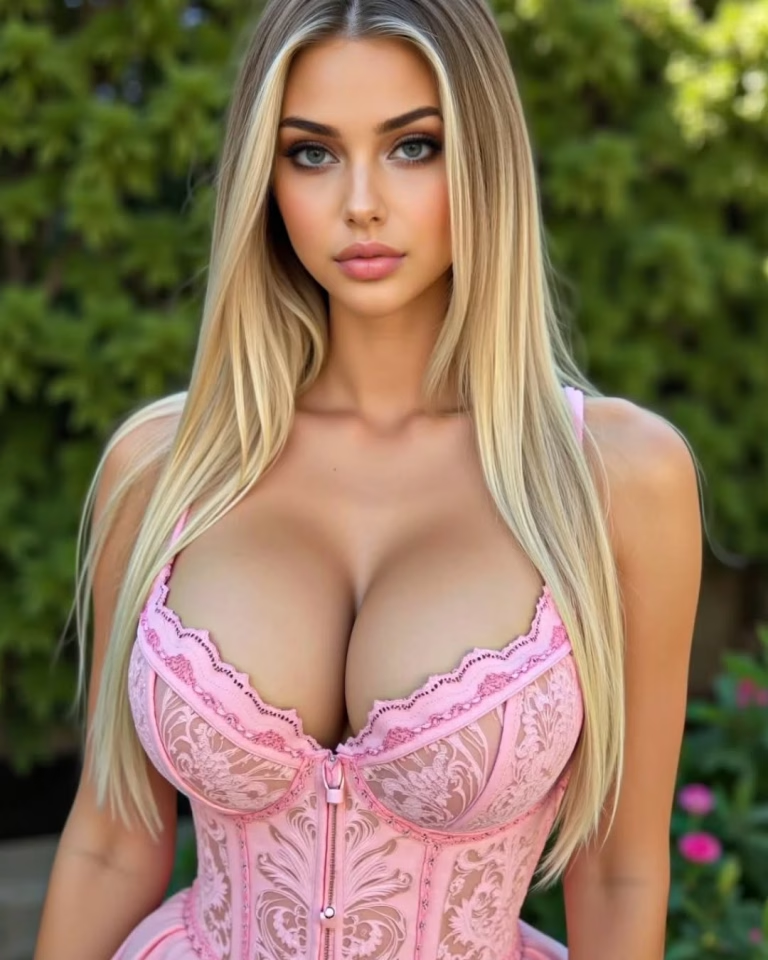
Amber Lee has been described online as an AI-generated Instagram model with a fashion and lifestyle-focused image. The original Viral Model Hub article presented her as an example of how virtual personalities could build audiences and work with brands.
There is an important limitation, however: several of the article’s specific claims could not be independently confirmed during this update. The exact Instagram handle previously associated with the profile was not reliably available in public search results, and I could not verify a named creator, agency, follower history, campaign list, or public statement explaining how the character was made.
That does not prove that the profile never existed. It means that the available evidence is not strong enough to present those details as established facts.
What the original profile claimed
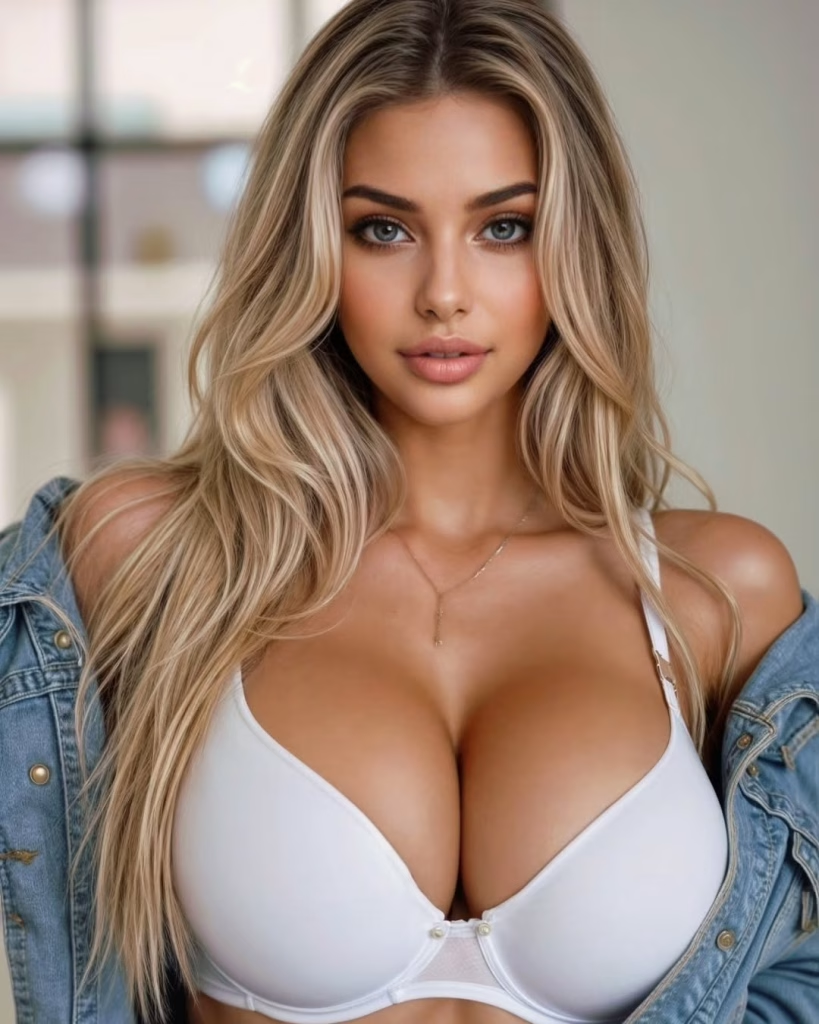
The earlier article described Amber Lee as a virtual Instagram personality rather than a human model. It said that her images combined artificial intelligence and digital design, and that her content focused on fashion, lifestyle, and a carefully controlled visual identity.
Those are plausible features of a virtual-influencer project, but plausibility is not the same as verification. A trustworthy profile should be able to identify the public account, explain who operates it, or point to an interview, campaign page, creator statement, or other primary source.
The earlier article also referred to audience interaction, commercial partnerships, and affiliate activity. No independent source was located for those claims during this review, so they should be treated as unconfirmed rather than repeated as facts.
Why verification matters for AI-model articles
Virtual influencers can look like ordinary creators at first glance. They may have a first name, a recognizable face, a consistent wardrobe, and captions written in a personal voice. The account may even answer comments or appear in advertising.
That creates a basic editorial question: who is behind the account?
A human creator usually has a traceable public identity, even if they keep parts of their private life offline. A virtual persona may instead be managed by an agency, a studio, a brand, or an anonymous group of artists. Without that information, readers cannot easily tell whether a post is an independent creative project, a marketing campaign, or a fictional character built for engagement.
For that reason, AI-model coverage should clearly separate four things:
- What the account says about itself.
- What the creator or operator has publicly confirmed.
- What outside reporting has established.
- What is only an interpretation based on the images or captions.
Amber Lee’s existing profile did not make those distinctions clearly enough.
A better way to describe Amber Lee
Based on the material currently available, the most careful description is that Amber Lee was presented as an AI-generated or virtual Instagram model associated with fashion and lifestyle imagery. The profile appears to have been intended as an example of the growing virtual-influencer trend.
It would be premature to describe Amber Lee as a major commercial influencer, a brand ambassador, or a fast-growing creator without a verifiable account history and supporting campaign records. It would also be misleading to publish a follower count without a date and a source, because social-media numbers change quickly and can be difficult to confirm after an account is renamed, deleted, or made private.
This distinction may make the story less sensational, but it makes the article more useful. Readers deserve to know when a profile is documented and when the public record is incomplete.
The wider virtual-influencer trend
The interest in profiles such as Amber Lee reflects a larger change in online publishing. Digital characters can be designed with a consistent appearance, setting, and tone. A studio can create images without arranging a traditional photo shoot, and the same character can appear in different locations, outfits, or campaign concepts.
That flexibility is attractive to marketers, but it also introduces practical and ethical questions. Audiences should be told when an image is synthetic or heavily generated. Brands need to make advertising relationships clear. Creators must consider whether the character resembles a real person and whether the content could mislead viewers.
There is also a difference between using AI as a creative tool and presenting a fictional person as if she were a real individual. The more realistic the images become, the more important disclosure becomes.
What readers should check before trusting a virtual-model profile
When researching any AI-generated model or virtual influencer, look for:
•An official account or website that can be reached directly.
•A named creator, studio, agency, or brand owner.
•A dated explanation of how the character was created.
•Clear disclosure that the images or persona are synthetic.
•Verifiable campaign, publication, or partnership records.
•Consistent information across the account, website, and outside sources.
•A clear distinction between advertising, satire, fiction, and personal posting.
If those details are missing, the safest wording is “described as,” “presented as,” or “reported to be”—not a confident statement that cannot be supported.
Final assessment
Amber Lee remains an interesting example of the questions raised by virtual fashion profiles, but the public evidence available for this update is limited. The strongest version of the story is not a list of impressive but unsupported claims. It is a transparent look at how easily a digital persona can acquire a biography before readers can confirm who created it or what is real behind the account.
For now, Amber Lee should be treated as an unverified virtual-model profile unless the original account, creator, or supporting campaign records become available. If those sources are located, this article can be updated with a dated follower count, creator details, verified collaborations, and a clearer account history
Editorial note
This article was reviewed on October 5, 2026. The review could not independently verify the former Instagram handle cited in the earlier version, the identity of the creator, follower figures, or commercial partnerships. Readers can contact Viral Model Hub with a primary source or correction.
Post Views: 1,530

Pingback: Jackie Mezway: What We Know About the AI Fashion Model
Pingback: Elana Peachy: The AI Muse Redefining Digital Influence in 2025 - Viral Model Hub
Pingback: Bella Wilson
Pingback: Jessica Williams