How can you tell if an Instagram model is AI-generated? Start with the account’s disclosure, Instagram’s AI labels, account history, creator information, reverse-image results, and available provenance signals. Visual clues such as unusual hands or perfect skin can justify further research, but they do not prove that an image or profile was created with AI.
The most important point is simple: you usually cannot prove that an Instagram model is AI-generated from one image or visual clue alone. The strongest evidence is a clear disclosure from the account, a statement from the creator or studio, consistent account information, reliable reporting, or verifiable content provenance.
A polished face, unusual hands, perfect skin, or an unrealistic background may justify a closer look, but those details are not proof. Human photography can be heavily edited, and AI tools can be used only for small parts of an otherwise real image.
What does “AI-generated Instagram model” mean?
The phrase can describe several different things:
• A fictional character whose face and body are generated or composited digitally.
• A virtual influencer operated by a person, agency, studio, or brand.
• A real model whose photographs have been substantially changed with generative AI.
• A real creator who uses AI for backgrounds, styling, retouching, captions, or concept images.
• A synthetic image made to resemble a real person without proving that the person in the image exists.
These categories should not be treated as interchangeable. AI-assisted content is not automatically the same as an entirely AI-generated person. A photographer may use an AI tool to remove an object or extend a background while the model, location, and original photograph remain real.
1. Look for an explicit disclosure
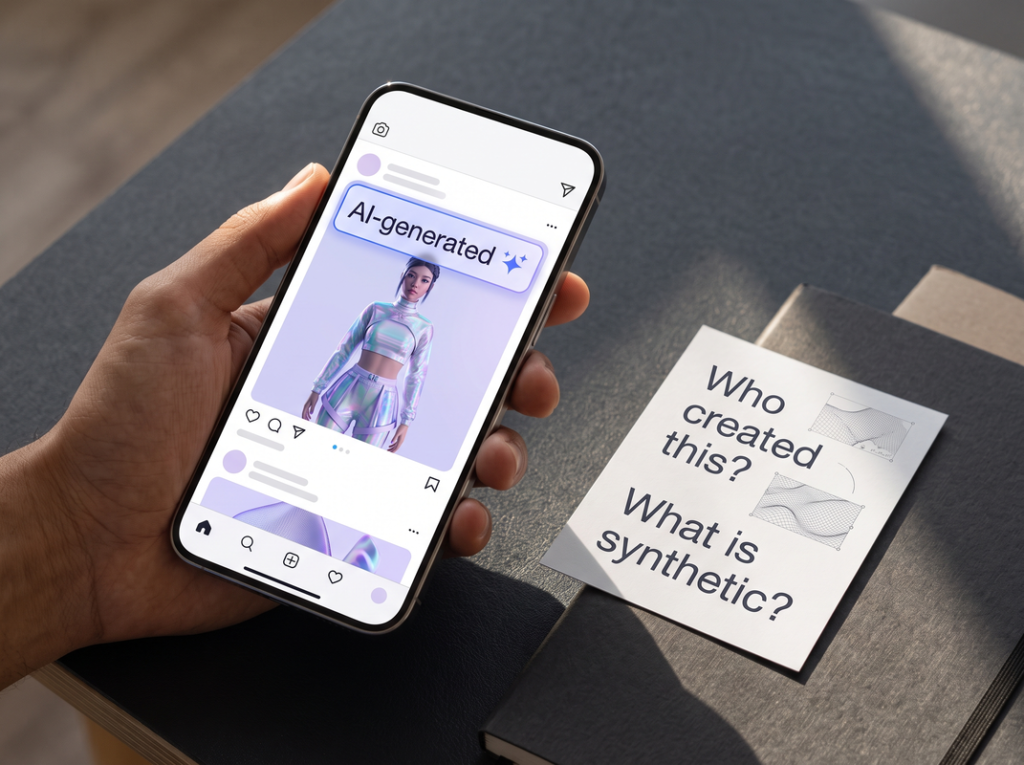
Start with the account’s own wording. Check the profile biography, pinned posts, captions, highlights, website, and linked portfolio for terms such as:
• AI-generated
• Virtual influencer
• Digital model
• Synthetic character
• CGI character
• Created with generative AI
• Managed by [a named studio, agency, or brand]
A clear disclosure is stronger evidence than an appearance-based guess. Look for a dated explanation that tells readers what is synthetic and who operates the account.
A good disclosure may explain that the character is fictional, that images are generated with AI, or that the account combines human photography with digital production. It is also useful when the account identifies a real operator, creative team, agency, or company.
Do not treat a vague phrase such as “digital creator” as automatic proof of AI generation. It may describe a real person who creates online content, a 3D artist, or a virtual character.
2. Check Instagram’s labels, but do not treat a missing label as proof
Meta has described AI-related labels on its platforms, including “AI info.” Meta says labels can be based on industry-shared signals in a file or on a person disclosing that content was created with AI. Meta has also explained that the label may cover content generated or significantly edited with AI tools.
Instagram may also display information about an AI-generated profile where that feature is available. A label can be useful evidence, but it is not a complete identity investigation. Labels can depend on disclosure, technical signals, product availability, and the way content was created or uploaded.
The reverse is equally important: the absence of an AI label does not prove that an image or profile is human-made. A creator may not disclose the use of a tool, technical signals may not survive editing or uploading, and platform labeling systems can change.
Treat the label as one piece of evidence. Read the account’s own explanation and compare it with the content history and outside sources.
3. Review the account’s history instead of one viral image
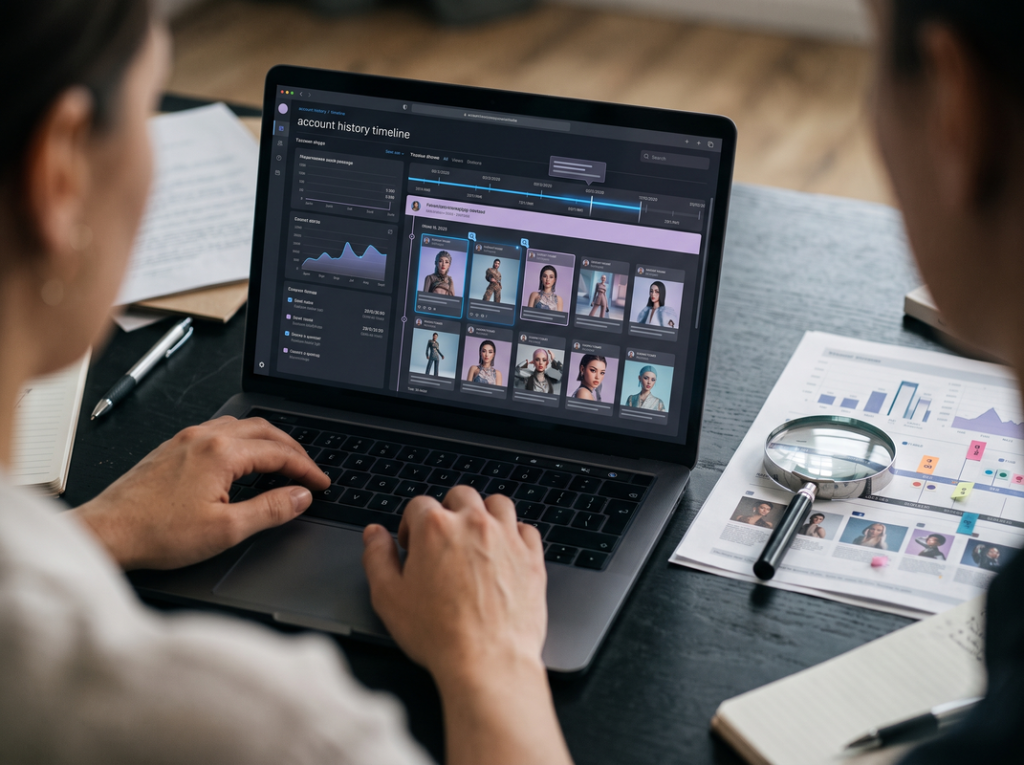
Scroll beyond the most popular post. Look for patterns across months or years:
• Does the face remain identical across impossible locations and lighting conditions?
• Does the account identify a consistent creator or operator?
• Are older posts available, or was the profile created recently?
• Do captions describe the character as fictional, virtual, or real?
• Are there behind-the-scenes images, live appearances, interviews, or event records?
• Does the account answer questions about how its images are made?
• Are partnerships linked to real brand pages, campaign pages, or press coverage?
An account history cannot prove that a person is real, but it can reveal whether the profile has a coherent public explanation. A sudden biography, unexplained professional history, and dozens of highly polished images are reasons to investigate—not reasons to declare the account fake.
4. Check who is behind the profile
A virtual model may be operated by an agency, advertising studio, fashion label, artist, or anonymous creator. The operator is often more verifiable than the character itself.
Search for the account name and handle together with terms such as:
• creator
• studio
• agency
• campaign
• interview
• virtual influencer
• digital human
• AI model
Give priority to primary evidence, such as:
• The account’s official website
• A creator or studio statement
• A named interview
• A brand campaign page
• A dated press release
• A reputable publication identifying the operator
Be careful with copied biography pages. A profile repeated across many websites may come from one original article rather than independent confirmation. Repetition is not the same as verification.
5. Use reverse-image search to find the earliest public context
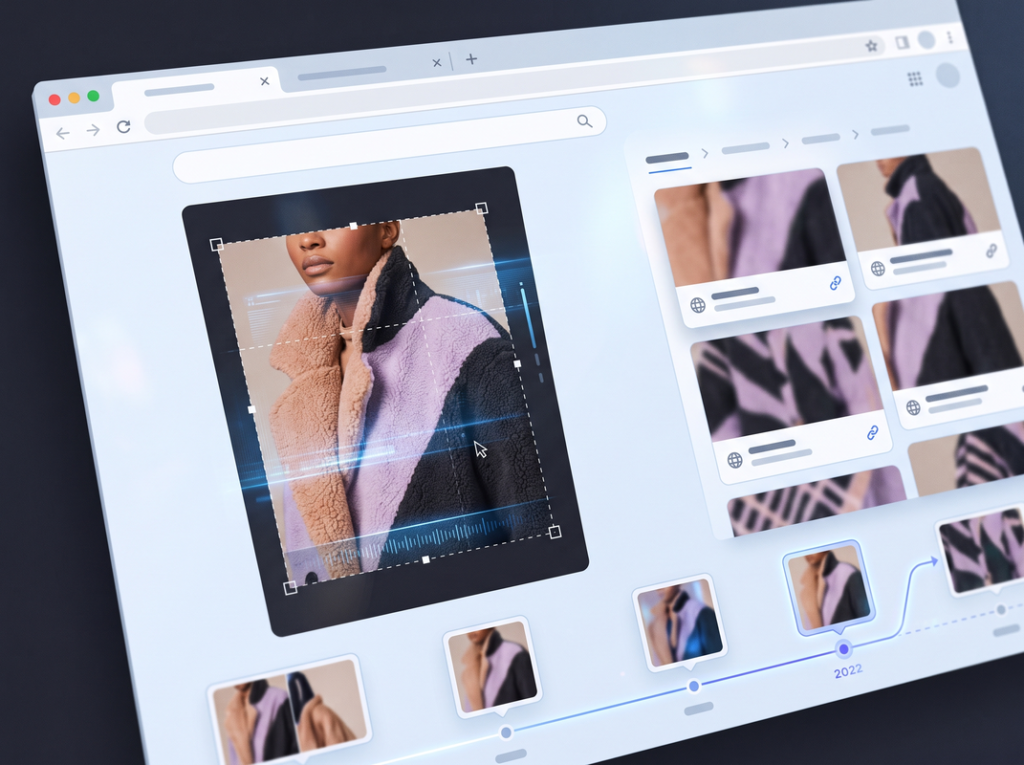
Reverse-image search can help identify whether a photograph appeared earlier on another account, website, stock library, campaign page, or portfolio. Google Lens allows users to upload an image, drag an image into search, paste an image URL, or search an image directly from a website.
A practical process is:
1. Save a screenshot or copy the public image URL.
2. Search the full image with Google Lens.
3. Crop and search distinctive areas, such as a logo, background, or unusual object.
4. Compare the oldest credible results rather than relying on reposts.
5. Check whether the image is labeled as a campaign, 3D artwork, editorial photograph, or AI experiment.
6. Record dates and source links before drawing a conclusion.
Reverse-image search has limits. It may return similar images rather than the original, and a generated image may have no earlier public match. A lack of results does not prove that an image is AI-generated.
Also consider privacy. Do not upload private photographs, children’s images, or sensitive personal material to a third-party search service without understanding how the service handles uploads and URLs.
6. Inspect image details carefully—but treat visual clues as clues
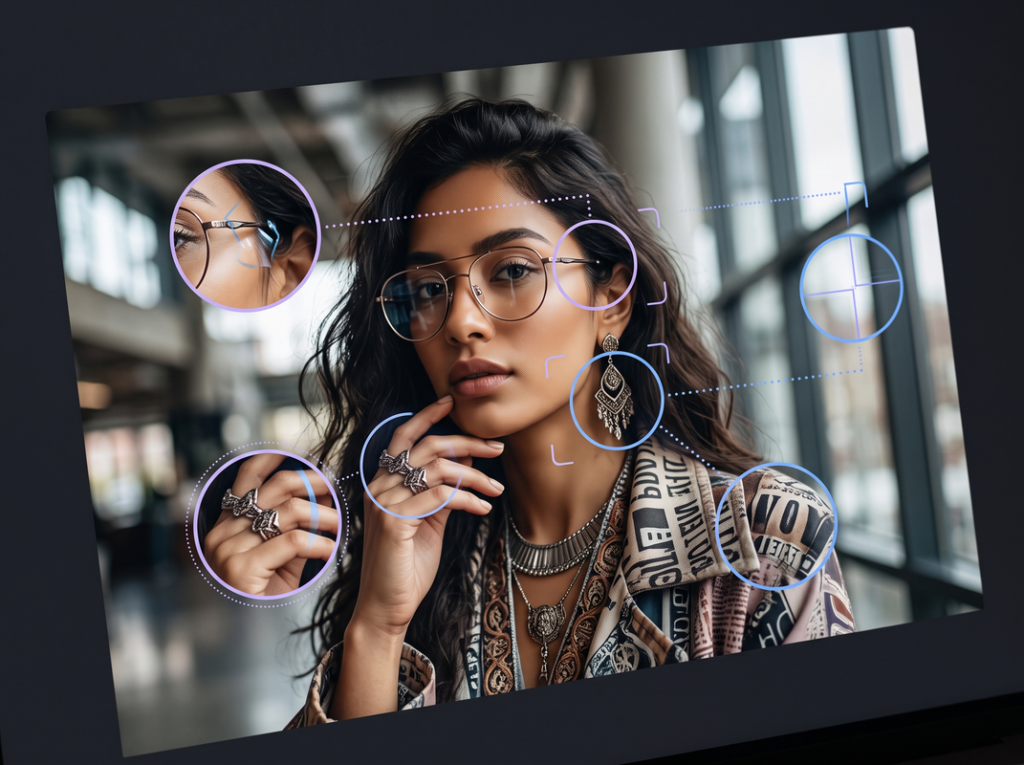
Synthetic images can contain inconsistencies, but modern generation and editing tools are improving quickly. Useful areas to inspect include:
• Hands and fingers
• Jewelry and eyeglasses
• Text on clothing or signs
• Repeated patterns and logos
• Reflections and shadows
• Teeth, ears, and hair edges
• Background faces and architecture
• Unusual object connections
• Inconsistent lighting or perspective
These checks are useful for deciding whether to investigate further. They are not a reliable stand-alone AI detector. A real photograph can contain lens distortion, motion blur, compression, retouching, or a difficult reflection. A generated image can also look visually consistent.
Avoid statements such as “the hands look strange, so the model is definitely AI.” Use more careful language: “The image contains visual inconsistencies that warrant further verification, but they do not establish how it was made.”
7. Check provenance and Content Credentials when available
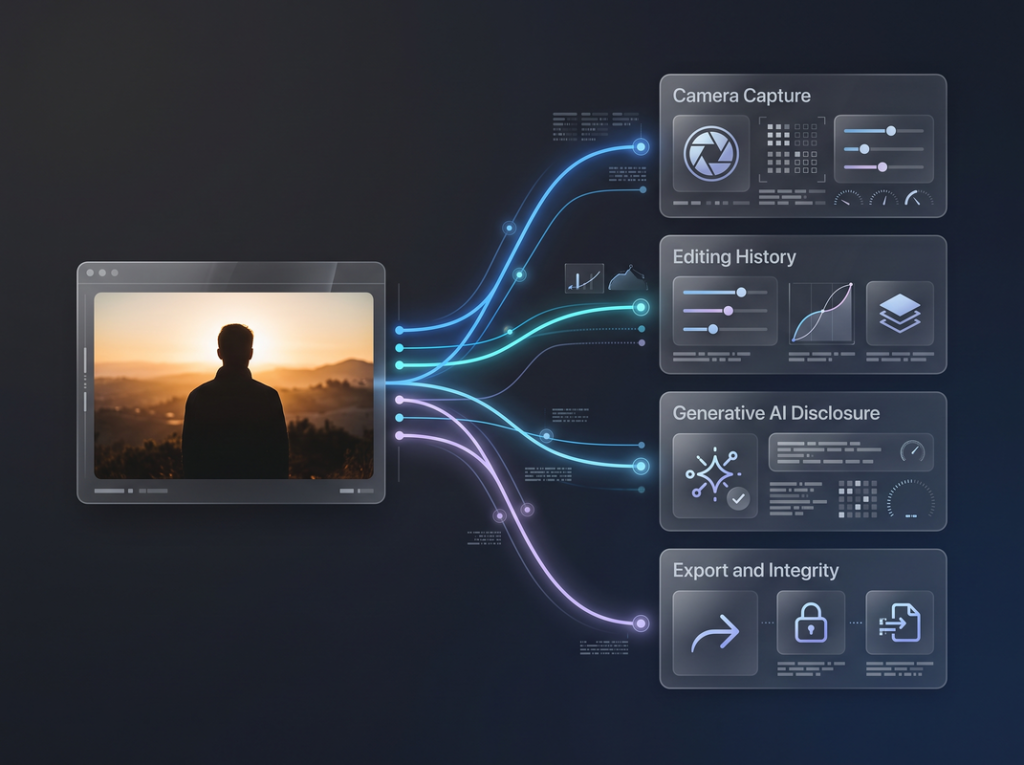
Some tools attach provenance information to images. Content Credentials and the C2PA standard can record details about an asset’s origin and editing history when the creatoring tools and publishing workflow preserve those records.
A provenance record can help answer questions such as:
• Was the file created by a camera or software tool?
• Which editing steps were recorded?
• Was generative AI listed in the content history?
• Has the file been altered since the record was created?
Provenance is helpful, but it is not a universal truth machine. Metadata can be removed during screenshots, exports, reposts, or platform processing. A file without credentials is not automatically synthetic, and credentials do not prove that every caption or identity claim is true.
Use provenance as supporting evidence alongside the account’s disclosure and independent sources.
8. Understand the limits of AI detectors
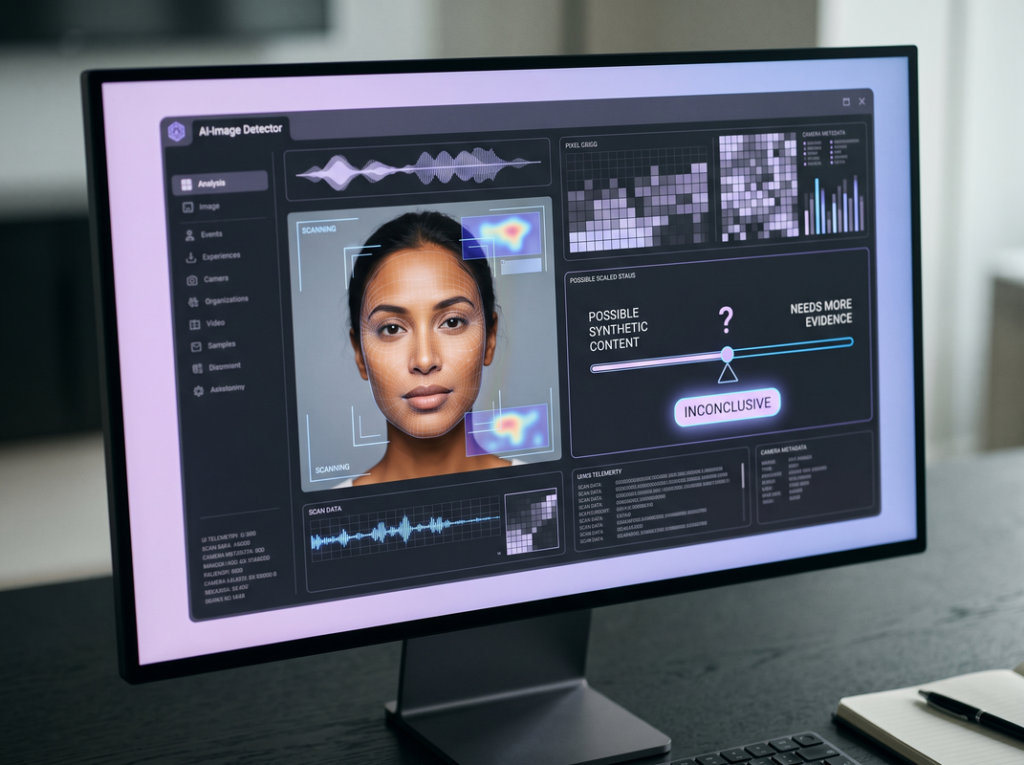
Online AI-image detectors can produce useful research leads, but their output should not be treated as proof. Detection systems can produce false positives and false negatives, especially after an image has been resized, compressed, edited, screenshotted, or mixed with real photography.
Do not publish a serious claim about a person’s identity based only on a detector score. If a detector says an image is likely synthetic, describe it as an automated estimate and seek stronger evidence.
The same caution applies to AI-generated-text detectors. They are not reliable evidence that an account is operated by an AI, that a caption was written by a machine, or that a real person is pretending to be fictional.
9. Separate evidence about the image from evidence about the person
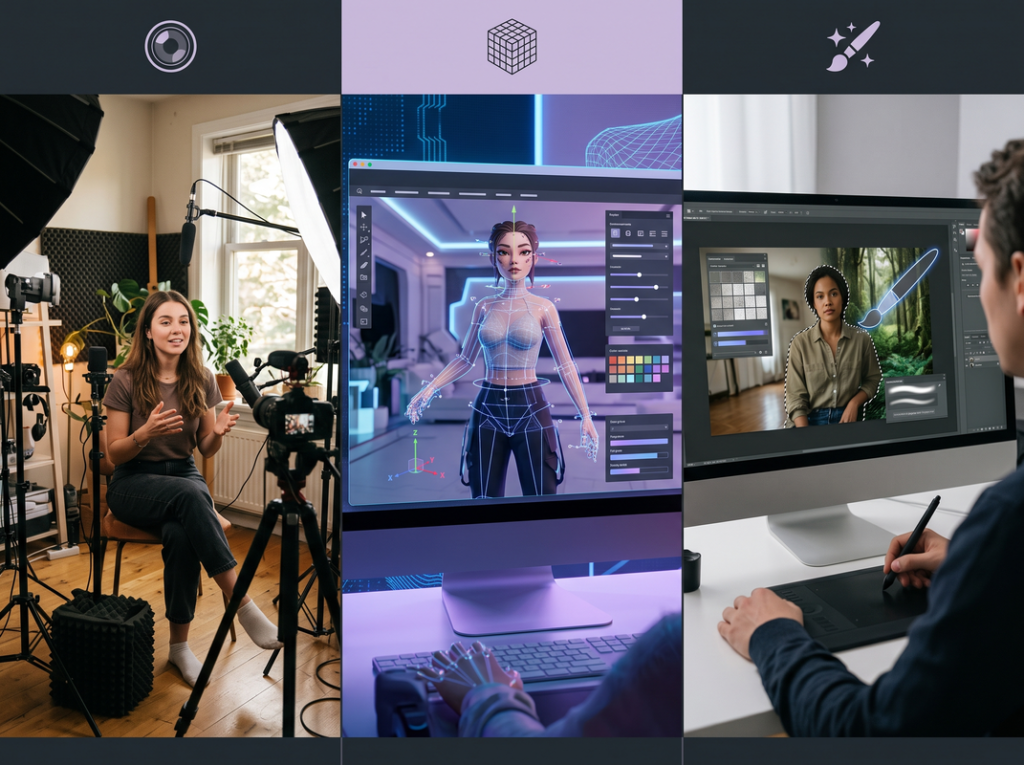
An image can be AI-generated without proving who operates the account. An account can be operated by a real person while presenting a fictional character. A real model can appear in a photograph that has been heavily altered.
Keep these questions separate:
1. Is this particular image synthetic or heavily AI-edited?
2. Is the account presenting a fictional or virtual persona?
3. Is there a real model behind the image?
4. Who operates the account?
5. Is the profile connected to a brand, agency, or campaign?
6. Has the account disclosed its production method?
A responsible article should answer only the questions supported by evidence. If the public record cannot identify the operator, say so.
What does not prove an Instagram model is AI-generated?
The following observations may justify checking further, but they do not prove an AI identity:
• Perfect skin or a symmetrical face
• A very large follower count
• A glamorous lifestyle
• No casual or behind-the-scenes photos
• Unusual hands in one image
• A caption that sounds generic
• A recent account with many polished images
• Comments that appear repetitive
• A profile name that sounds fictional
• The use of filters or digital retouching
Do not assume that a real person must post unedited images or reveal private information. Privacy, professional photography, cosmetic editing, and careful branding are not evidence of synthetic identity.
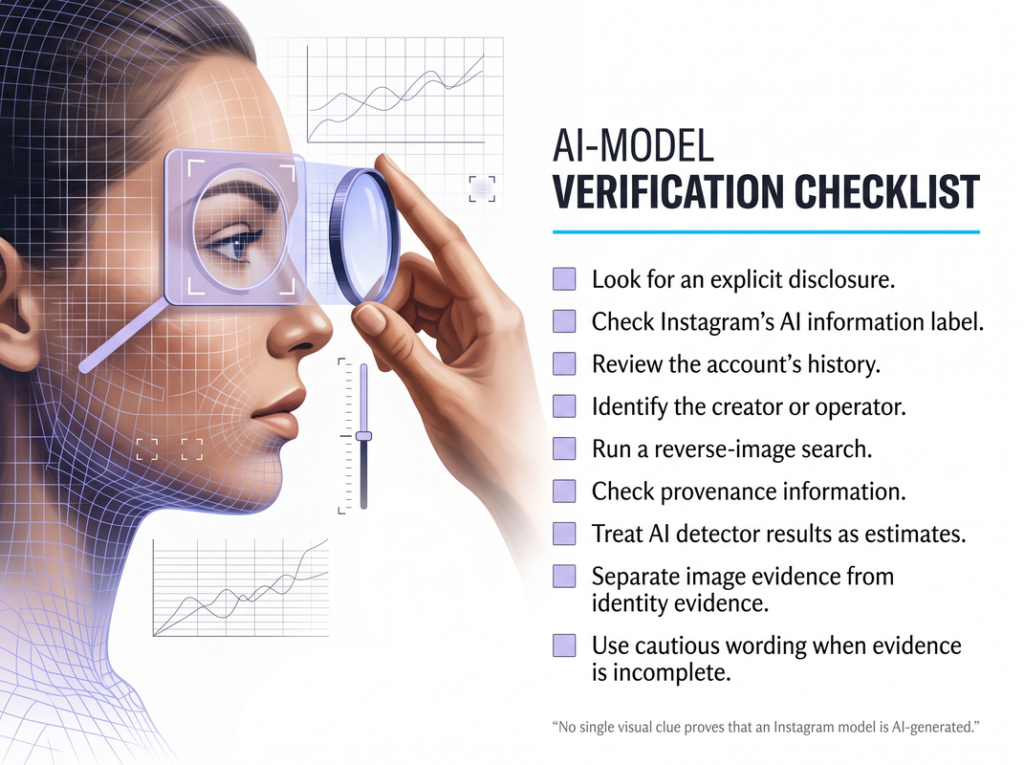
A practical verification checklist
Before describing an Instagram model as AI-generated, ask:
•Does the account clearly disclose that the persona or images are synthetic?
•Is there an Instagram AI label or other platform disclosure?
•Is the label attached to the profile, a particular post, or an advertisement?
•Does the account identify a creator, studio, agency, or brand operator?
•Can the identity claim be supported by a dated primary source?
•Do reputable independent sources confirm the same description?
•Does reverse-image search reveal an earlier source or campaign?
•Are provenance or Content Credentials available?
•Am I describing the image, the persona, or the operator—and do I have evidence for each?
•Have I avoided treating visual clues or an AI-detector score as proof?
If the answer to the strongest questions is no, use cautious language such as “presented as a virtual model,” “public sources describe the account as AI-generated,” or “the account’s production method could not be independently confirmed.”
How to write about an uncertain profile
A transparent profile separates four categories:
•Self-description: what the account says about itself.
•Primary confirmation: what the creator, operator, studio, agency, or brand has directly stated.
•Independent reporting: what named reputable sources have documented.
•Interpretation: what the images or posting pattern may suggest but cannot establish.
For example, this is safer:
The account presents the character as a virtual model, and public posts describe the images as AI-generated. The operator and production workflow were not independently confirmed during this review.
This is too strong without evidence:
She is definitely a fully AI-generated person created by a major studio and already works with leading brands.
Do not invent measurements, age, nationality, follower counts, partnerships, income, or creator identity. Social-media numbers should always have a date and a source, and many claims become impossible to verify after an account is renamed, deleted, or made private.
Examples of transparent profile research
Viral Model Hub’s Amber Lee profile shows why evidence boundaries matter. The page describes Amber Lee as a profile presented as virtual or AI-generated, while explaining that the former handle, creator identity, follower history, and commercial partnerships could not be independently confirmed.
The same approach can be used for other digital-model profiles, including Jackie Mezway, Elana Peachy, Bella Wilson, and Jessica Williams. The goal is not to make every profile sound mysterious. The goal is to distinguish what is documented from what is merely repeated online.
Final assessment
There is no single visual test that can reliably prove whether an Instagram model is AI-generated. The best process combines the account’s own disclosure, Instagram’s available labels, account history, operator research, reverse-image search, provenance information, and careful source comparison.
A missing label does not prove that an account is human, and an unusual image does not prove that it is synthetic. The most responsible conclusion may be that an account is presented as virtual, while the creator, operator, or production method remains unconfirmed.
That wording is more useful to readers than a confident guess. It also reduces the risk of misidentifying a real person, repeating an unsupported biography, or turning a visual suspicion into a factual claim.
Editorial note
This article was reviewed on October 9, 2026. It uses current Meta guidance on AI-content labels and Instagram profile information, Google’s official Google Lens instructions, and public information about content provenance and verification. Platform labels, tools, and policies can change. Visual clues and automated detector scores are treated as research leads rather than proof.
Sources reviewed
•Meta: Our approach to labeling AI-generated content and manipulated media — AI info labels, self-disclosure, industry signals, and the limits of platform labeling.
•Instagram Help: About AI-generated profiles on Instagram — official information about the AI-generated profile feature.
•Google Search Help: Search with an image on Google — Google Lens upload, URL, drag-and-drop, and website-search methods.
•C2PA: Coalition for Content Provenance and Authenticity — provenance standards and Content Credentials context.
•NIST: Reducing Risks Posed by Synthetic Content — synthetic-content risks and verification considerations.
•Content Credentials — provenance and media-transparency information.