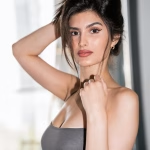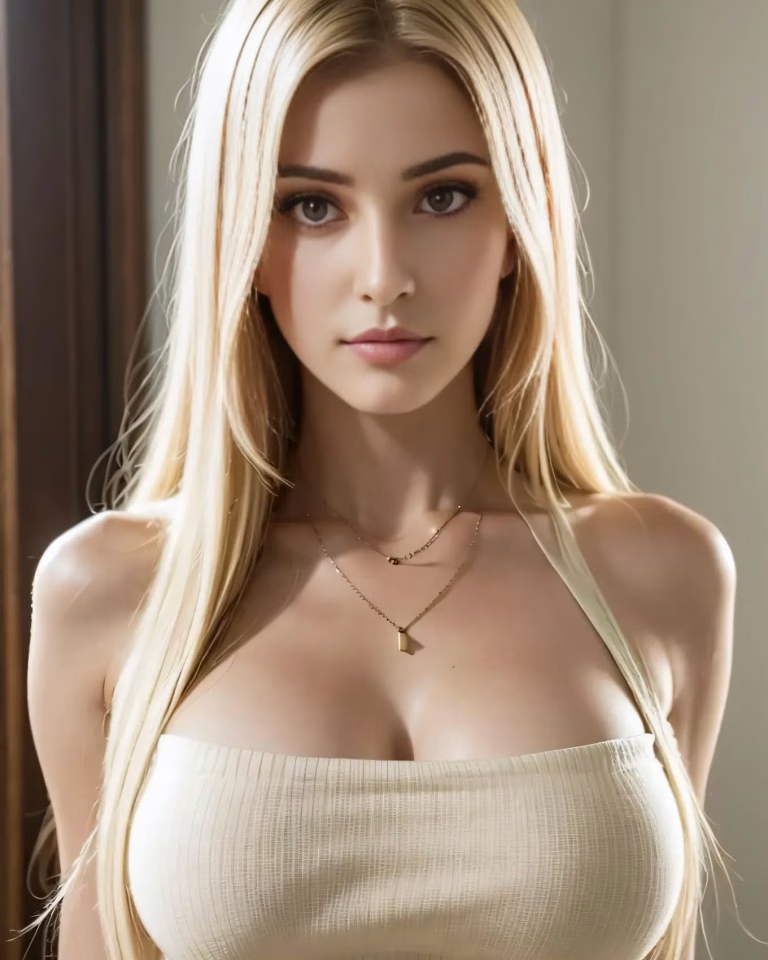

Bella Wilson has been described on Viral Model Hub as an AI model changing fashion and social media. The earlier article presented her as a digital character created by an anonymous Parisian technology collective, with a cyberpunk-inspired wardrobe and a growing Instagram audience.
Those details make a compelling story. The problem is that I could not independently verify the underlying profile during this update.
I did not find a confirmed official account, a named creator, a studio website, a campaign announcement, or reliable reporting that connects a specific Bella Wilson profile to the claims in the earlier article. Search results also return other people using the name Bella Wilson, including a public Instagram account, but there is no evidence that those accounts are the AI model described by the old article.
That distinction is important. A common name should never be treated as proof that two online identities are the same person or project.
What the earlier article claimed
The original article said that Bella Wilson was not human and had been designed by a secretive Parisian tech collective. It described a collaboration between AI specialists, 3D artists, and fashion designers, and said that the character’s visuals combined haute couture with cyberpunk styling.
The article also stated that Bella had an Instagram following, virtual brand collaborations, and a meaningful influence on fashion marketing. It presented virtual models as a possible alternative to some traditional production costs and logistics.
These are all claims that require evidence. A profile should link to the account being discussed and identify the source of information about its creator, audience, and commercial work. Without that evidence, the claims should be presented as unverified—not as facts about a real person or an established digital character.
What can be verified about Bella Wilson?
At the time of this review, the public record is not strong enough to confirm:
• Which Instagram account, if any, is the official Bella Wilson AI-model account.
• Whether Bella Wilson is a fully fictional digital character.
• Whether a Paris-based technology collective created the persona.
• Who operates or manages the profile.
• Whether the character has worked with fashion or technology brands.
• How many followers the account has or had at a particular time.
• Which software, AI system, or 3D tools were used to create the images.
A public account using the name Bella Wilson is not enough to answer those questions. The account may belong to a human creator, a model, a fan page, or an unrelated person with the same name.
Why identity matters in virtual-model reporting
Virtual influencers are often introduced through a short biography that sounds like a press release. The character is given a birthplace, a creative team, a signature style, and a business story. If that biography is copied across several websites, it can begin to look independently confirmed even when every page is repeating the same original claim.
That pattern creates a special challenge for AI-model coverage. The images may be easy to share, but the source of the images can be difficult to trace. A name may appear on several platforms without the accounts being connected. A brand mention may be an aspiration rather than a completed campaign.
The solution is not to reject virtual models as a subject. It is to document them carefully. A useful article should identify the official account, link to primary statements, date follower figures, and clearly separate confirmed information from interpretation.
AI model, AI-assisted image, or ordinary creator?
The phrase “AI model” can refer to more than one type of online identity:
• A completely fictional person generated through software.
• A virtual influencer managed by an agency or studio.
• A real model photographed and then digitally altered.
• A human creator who uses AI for backgrounds, styling, or editing.
• A fictional concept used only for a marketing campaign.
Those categories have different implications for disclosure, consent, advertising, and audience expectations. It would be inaccurate to call a person an AI-generated model simply because an image looks unusually polished.
For Bella Wilson, the most careful wording is that the profile was described by the earlier article as an AI model, while the identity of the account and the production process remain unverified.
The wider fashion conversation
The original Bella Wilson article raises genuine questions about the role of digital characters in fashion. Virtual models can be placed in settings that would be expensive or impossible to build physically. Clothing can be shown in a synthetic environment, and a campaign can be revised without arranging a new shoot.
At the same time, virtual production does not automatically make a campaign sustainable or inclusive. Digital work still requires energy, software, labor, and creative decision-making. A synthetic model can expand the range of visual concepts, but it can also reproduce narrow beauty standards if the people designing the character are not careful.
The most useful discussion is therefore more specific than saying AI will “revolutionize” fashion. It should ask who controls the character, who benefits commercially, what audiences are told, and whether human models and artists are being fairly represented.
What readers should check before trusting the profile
If an official Bella Wilson account or creator statement becomes available, readers should look for:
- A direct link to the official profile.
- A named creator, agency, studio, or brand owner.
- A dated explanation of how the images are produced.
- Clear disclosure that the character is synthetic or virtual.
- Campaign pages or brand announcements confirming commercial work.
- Consistent information across the profile and independent sources.
- A clear distinction between fiction, advertising, and personal identity.
Follower counts should always include the date checked. A social account can be renamed, removed, or made private, and search results can combine unrelated people who share the same name.
Final assessment
Bella Wilson was presented in the earlier Viral Model Hub article as an AI-generated fashion persona created by an anonymous Parisian technology collective. During this update, I could not verify that creator, the official account, the alleged collaborations, or the audience claims.
Other public profiles use the name Bella Wilson, but no reliable evidence connects them to the AI-model story. They should not be treated as the same identity without confirmation.
The most accurate description for now is therefore a cautious one: Bella Wilson is an unverified AI-model profile described in earlier online content, not a fully documented virtual influencer with a confirmed creator and campaign history.
If a primary source becomes available, this article can be updated with a verified account, creator information, dated audience data, and confirmed partnerships. Until then, the article should preserve the difference between an attractive digital-fashion narrative and evidence that readers can actually check.
The same verification issue appears in our profile of Elana Peachy, where public profiles do not fully confirm the earlier AI-generated label.
Editorial note
This article was reviewed on October 5, 2026. Public searches were checked for a confirmed Bella Wilson AI-model account, creator information, Instagram references, and evidence supporting the earlier claims about a Parisian tech collective, brand partnerships, and audience growth. Those details could not be independently confirmed. Unrelated public profiles using the Bella Wilson name were not treated as evidence for the AI-model story.
Sources reviewed
BBC background on virtual Instagram celebrities