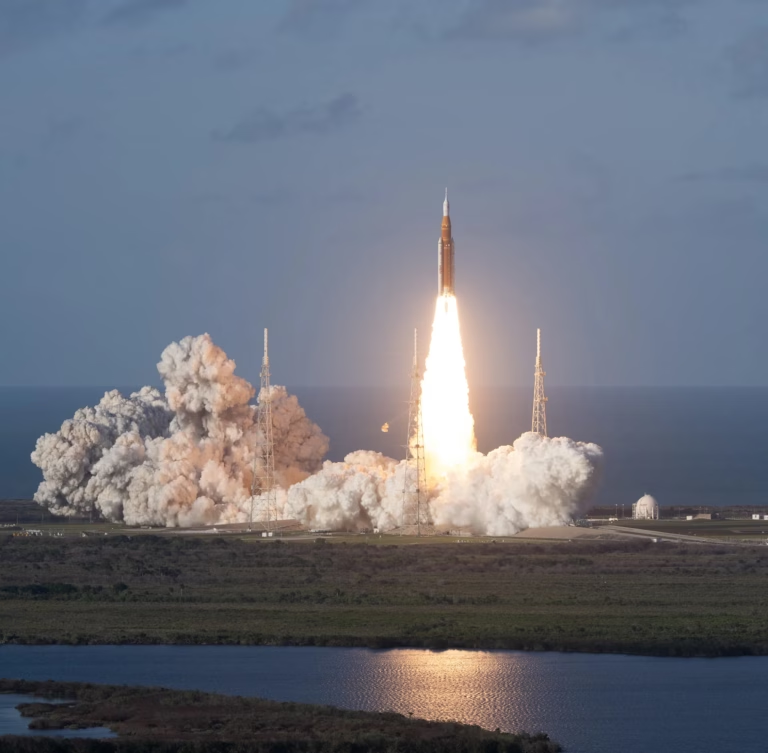
NASA’s Artemis II mission launched on April 1, 2026, carrying four astronauts on a crewed journey around the Moon and back. The Orion spacecraft splashed down on April 10, 2026, after completing a roughly 10-day mission and traveling about 694,481 miles.
Artemis II was the first crewed flight of NASA’s Artemis program and the first crewed lunar flyby in more than 50 years. The mission tested the Orion spacecraft, NASA’s Space Launch System rocket, and the systems needed for future human missions to the Moon and Mars.
When did Artemis II launch?
Artemis II lifted off at 6:35 p.m. Eastern Daylight Time on April 1, 2026. NASA launched the mission from Launch Complex 39B at Kennedy Space Center in Florida.
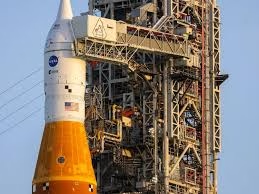
The crew traveled aboard Orion, NASA’s deep-space exploration spacecraft. Orion launched on top of the Space Launch System, commonly called SLS, NASA’s heavy-lift rocket for the Artemis program.
The mission is now complete. Orion returned to Earth and splashed down off the coast of San Diego on April 10, 2026.
Who was on the Artemis II crew?
The Artemis II crew included three NASA astronauts and one Canadian Space Agency astronaut:
• Reid Wiseman, NASA astronaut and mission commander
• Victor Glover, NASA astronaut and pilot
• Christina Koch, NASA astronaut and mission specialist
• Jeremy Hansen, Canadian Space Agency astronaut and mission specialist
The crew was the first group of astronauts to fly aboard Orion on a mission around the Moon. Their work provided NASA with operational and scientific information for future crewed missions.
What was the goal of Artemis II?
Artemis II was a crewed test flight rather than a lunar landing mission. The spacecraft traveled around the Moon and returned to Earth without landing on the lunar surface.
NASA used the mission to evaluate several important systems, including:
• Orion’s life-support and crew systems
• Navigation and communication during deep-space flight
• The SLS rocket’s performance
• Orion’s heat shield during high-speed reentry
• Recovery operations after splashdown
• Procedures for a crewed mission beyond low Earth orbit
The mission also gave astronauts and flight teams experience operating farther from Earth than any crew in more than half a century.
How far did Artemis II travel?
NASA reported that Orion traveled approximately 694,481 miles during the mission. The spacecraft completed a lunar flyby before returning toward Earth.
The flight path allowed the crew to observe the Moon and Earth from deep space while testing the systems required for future Artemis missions. NASA also released photographs showing Earth, the Moon, the Orion spacecraft, and the crew working inside the vehicle.
What happened during the Artemis II mission?
After launch, Orion completed the early stages of its flight and continued toward the Moon. The crew photographed Earth and the lunar surface through the spacecraft’s windows and helped carry out mission activities during the journey.
NASA’s official image galleries include views of the crew inside Orion, Earth photographed from deep space, the Moon during the lunar flyby, and the spacecraft’s journey away from Earth.
The mission returned safely to Earth on April 10. Navy divers and recovery teams assisted the crew after splashdown and helped recover the Orion spacecraft.
What did NASA learn from Artemis II?
NASA’s initial post-flight assessment found that Orion’s heat shield and other major systems performed as expected during reentry. The spacecraft entered Earth’s atmosphere at nearly 35 times the speed of sound before splashing down near San Diego.
NASA also reported that the SLS rocket accurately placed Orion into its intended trajectory. Engineers continued reviewing data from the mission, including an issue involving a urine vent line, to help improve future Artemis flights.
The mission’s results are important because Artemis III and later missions will build on the hardware, procedures, and experience tested during Artemis II.
Are Artemis II images available to the public?
Yes. NASA has published official Artemis II photo and video collections. The agency’s multimedia resources include galleries covering:
• The launch
• The lunar flyby
• The journey to the Moon
• The astronauts
• The return to Earth and splashdown
• The Orion spacecraft
• The Space Launch System rocket
• Mission science and operations
The official NASA Artemis II multimedia collection is the best place to find mission photographs and videos. NASA’s Artemis II Journey to the Moon gallery includes images of Earth, the Moon, Orion, and the crew during the flight.
When using a NASA image, check the individual image caption and NASA’s media-use guidance. Keep the original credit information with the image, and do not assume that every image on a NASA page has the same licensing status if it includes third-party material, logos, or identifiable commercial content.
Is Artemis II the same as a Moon landing?
No. Artemis II was a crewed lunar flyby, not a lunar landing. The astronauts traveled around the Moon and returned to Earth, but they did not land on the lunar surface.
The distinction matters because Artemis II was designed to test deep-space systems and crew operations. Future Artemis missions are intended to build on those results and support later human missions to the lunar surface.
Why Artemis II matters for future Moon missions
Artemis II was a major test of NASA’s plan for sustained human exploration beyond Earth orbit. The mission combined a new crewed spacecraft, a heavy-lift rocket, a deep-space flight path, and a full recovery operation.
The astronauts’ experience and the data collected from Orion and SLS will help NASA prepare for future lunar missions and longer-term exploration goals, including eventual human missions to Mars.
The mission also produced a new collection of photographs of Earth and the Moon from a crewed spacecraft. Those images provide a visual record of the first crewed Artemis flight and help the public follow the program beyond launch-day coverage.
Final assessment
Artemis II was NASA’s first crewed Artemis mission and the first crewed lunar flyby in more than 50 years. It launched from Kennedy Space Center on April 1, 2026, carried Reid Wiseman, Victor Glover, Christina Koch, and Jeremy Hansen around the Moon, and splashed down near San Diego on April 10.
The mission did not land astronauts on the Moon. Instead, it tested Orion, the SLS rocket, crew procedures, deep-space operations, and reentry systems. NASA’s official galleries now provide photographs and videos from the launch, lunar flyby, journey home, and recovery.
Editorial note
This article was reviewed on October 6, 2026. Launch, crew, mission duration, flight path, splashdown, post-flight findings, and image resources were checked against NASA’s official Artemis II mission, gallery, multimedia, and post-mission assessment pages. The article describes Artemis II as a completed lunar-flyby mission, not an upcoming launch or a lunar landing.
Sources reviewed
• NASA Artemis II Mission — mission purpose, crew, Orion spacecraft, SLS rocket, and Artemis program context.
•NASA Artemis II Journey to the Moon Gallery — launch time, launch location, crew, spacecraft, and official mission images.
•NASA Artemis II Multimedia Resources — official photo, video, gallery, and media resources.
•NASA: Initial Artemis II Mission Assessments — splashdown, distance traveled, heat-shield assessment, recovery, and post-flight findings.
•NASA Artemis II Launch Day Updates — official launch-day reporting and timing.