
Laws feel like they should be fairly universal — murder is illegal everywhere, theft is illegal everywhere, and so on. But once you get past the obvious stuff, national law turns out to be a genuinely strange patchwork. Some countries have carved out legal exceptions so specific, so culturally or historically particular, that they exist basically nowhere else on Earth. Here’s a look at some of the most notable one-country legal outliers, and the reasoning — sometimes practical, sometimes surprising — behind each one.
Cannabis Coffee Shops — The Netherlands
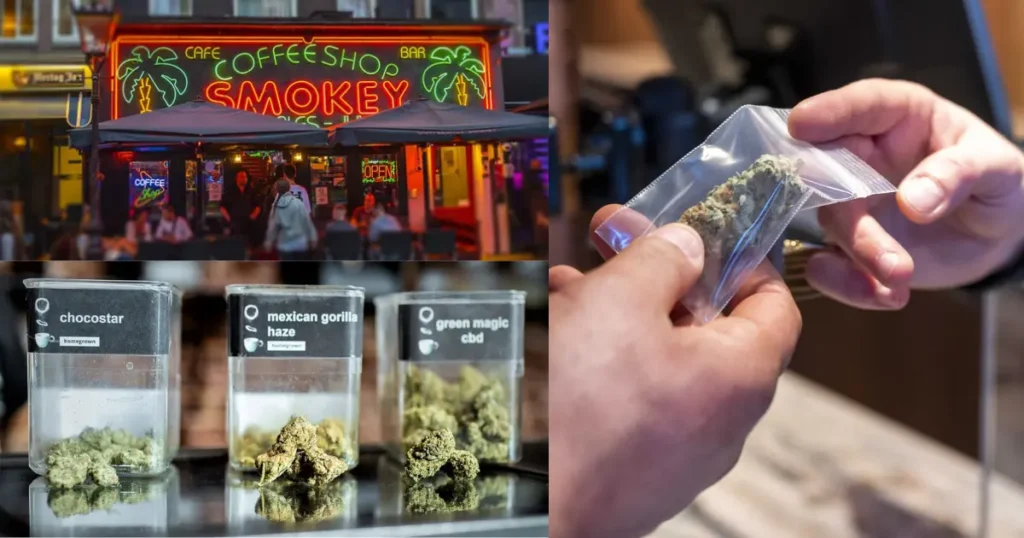
The Netherlands’ famous “coffee shop” system is often misunderstood as full legalization — it isn’t, technically. Cannabis sale and possession are still against Dutch law on paper, but a formal policy of tolerance (gedoogbeleid) means the government simply doesn’t prosecute licensed coffee shops that follow strict rules on quantity and age restrictions. It’s a legal gray zone unlike anything else in the world: not legal, not enforced, and functionally its own category.
Our take: The Dutch approach is a genuinely clever piece of legal engineering — rather than rewriting drug law outright, they built an entire regulatory framework around simply choosing not to enforce it. It’s the kind of solution that sounds almost too pragmatic to work, and yet it’s held up for decades.
Fully Regulated, Government-Sold Marijuana — Uruguay

Uruguay went further than the Netherlands, becoming the first country in the world to fully legalize and directly regulate recreational marijuana, including sales through licensed pharmacies to registered citizens. Unlike U.S. states with legal cannabis markets, this is a national law, not a state-level workaround of federal prohibition — making Uruguay’s system legally unique on a global scale.
Assisted Suicide for Foreign Nationals — Switzerland

Switzerland is one of the only countries in the world that permits assisted suicide for non-residents, a policy that’s made it the destination for so-called “suicide tourism” through organizations like Dignitas. Swiss law doesn’t require the person to be terminally ill, only that they have full mental capacity and a considered, autonomous wish to die — a notably broader standard than most countries that allow assisted dying only for their own citizens, and typically only in narrowly defined medical circumstances.
Our take: This is one of the more ethically debated entries on this list, and for good reason — it’s less a quirky legal footnote and more a genuinely significant policy difference that draws people from countries where assisted dying isn’t an option at all.
Legal Personhood for a River — New Zealand

In 2017, New Zealand passed a law granting the Whanganui River full legal personhood — meaning it can be represented in court, and harming it carries roughly the same legal standing as harming a person. It’s a genuinely unprecedented legal concept, rooted in the Māori worldview that the river is an ancestor rather than a resource, and no other country has replicated this exact legal structure for a natural landmark.
Legal, Protected Coca Leaf Chewing — Bolivia

Bolivia is constitutionally protected in allowing the cultivation, sale, and chewing of coca leaf — the plant cocaine is derived from — as part of Indigenous cultural and medicinal tradition. This sits in sharp contrast to the rest of the world, where the coca plant is tightly restricted under international drug treaties Bolivia has specifically carved out exceptions from.
Our take: It’s a useful reminder that the raw plant and the refined drug aren’t legally or culturally the same thing everywhere — something international drug policy has historically struggled to account for.
Decriminalized Possession of All Drugs — Portugal

Since 2001, Portugal has treated possession of small amounts of any drug — including heroin and cocaine — as a public health issue rather than a criminal one, diverting users to treatment rather than prosecution. It’s not full legalization; selling and trafficking remain criminal offenses. But the personal-possession approach remains distinctive enough that Portugal is still cited internationally as the reference case for this model, over two decades later.
Direct-to-Consumer Prescription Drug Advertising — United States and New Zealand

Turn on American television, and prescription drug commercials are unavoidable — a list of side effects read over footage of people happily walking on a beach. That’s not normal anywhere else. The United States and New Zealand are the only two developed countries in the world that permit direct-to-consumer advertising of prescription medications; nearly everywhere else, including the entire European Union, bans it outright over concerns it pressures doctors and patients toward brand-name drugs rather than clinical necessity.
Our take: Out of every entry on this list, this might be the one most people don’t even realize is unusual — Americans grow up assuming pharmaceutical ads are just a normal part of television, when in reality almost the entire rest of the world would find the concept strange.
Commercial Whaling — Japan, Norway, and Iceland
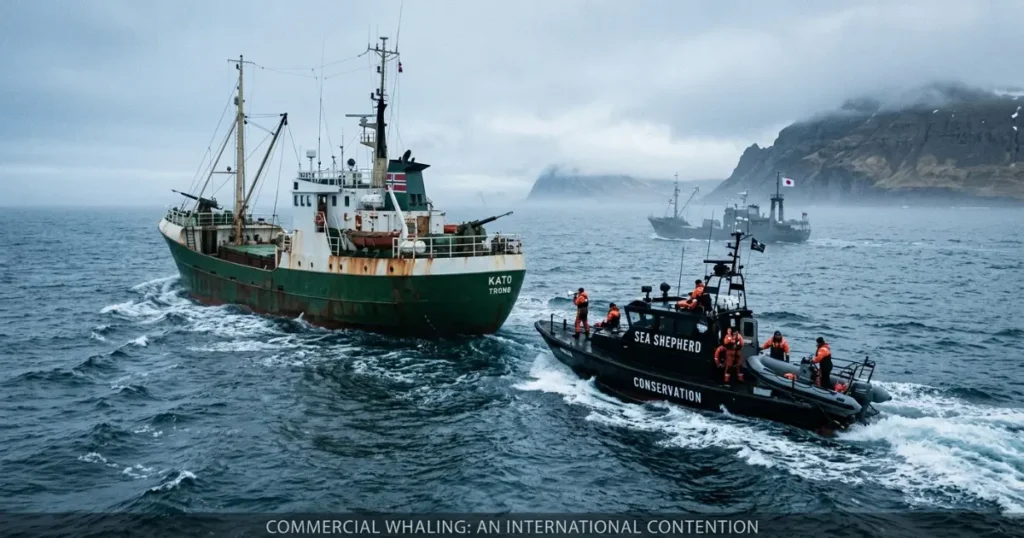
Commercial whaling is banned globally under an international moratorium that’s been in place since the mid-1980s, but Japan, Norway, and Iceland have each maintained legal exceptions or formally withdrawn from the moratorium’s restrictions, continuing limited commercial or “scientific” whale hunts. It remains one of the most internationally contentious legal carve-outs on this list, drawing regular condemnation from conservation groups and other governments.
Judicial Caning as Criminal Punishment — Singapore

Singapore’s legal system includes mandatory judicial caning for a range of offenses, from vandalism to drug trafficking and certain violent crimes — a form of corporal punishment that’s been phased out of nearly every other legal system in the world. It’s applied under strict medical supervision, but remains one of the starkest examples of a legal punishment that’s essentially unique to a single country’s modern justice system.
Civil Asset Forfeiture Without Conviction — United States

In the U.S., law enforcement can seize cash, cars, and property suspected of being connected to a crime — without ever charging, let alone convicting, the owner of anything. The property owner then has to prove their own innocence to get it back, an inversion of the normal burden of proof that’s essentially unheard of in other developed legal systems, most of which require an actual criminal conviction before permanent property seizure.
Our take: Of everything on this list, this might be the one with the least obvious cultural or historical justification — it’s less “unique tradition” and more a legal quirk that’s drawn genuine bipartisan criticism within the U.S. itself for years.
Why These One-Country Laws Exist At All
Looking across this list, the pattern isn’t really about which countries are “stricter” or “more permissive” overall — it’s that each of these laws grew out of a very specific local context: Indigenous cultural tradition in New Zealand and Bolivia, a pragmatic public-health experiment in Portugal, deep-rooted industry and cultural practice in Japan and Norway, or simply a legal system that evolved down a different historical path than everyone else’s, as with U.S. asset forfeiture. Global treaties and international pressure smooth out a lot of legal differences between countries over time — these are the outliers that, for one reason or another, never got smoothed out at all.
FAQ
Not technically — cannabis remains illegal under Dutch law, but a long-standing policy of tolerance means licensed coffee shops are not prosecuted for selling it under strict regulations.
Only the United States and New Zealand permit direct-to-consumer prescription drug advertising; it’s banned in the European Union and most other developed countries.
Yes — Switzerland is one of the only countries that permits assisted suicide for non-residents, provided the person has full mental capacity and a clearly considered wish to die.
Japan, Norway, and Iceland are the primary countries that continue some form of legal commercial or exception-based whaling despite a global moratorium adopted in the 1980s.