
There’s a specific kind of actor who comes around maybe once a decade — someone critics take seriously and teenagers put on their bedroom walls at the same time. Timothée Chalamet is that actor for this generation, and honestly, watching his career unfold over the last eight years has been one of the more satisfying arcs in modern Hollywood. He didn’t get famous by accident, and he didn’t stay famous by playing it safe either.
Here’s the full picture: who he is, how he got here, and what he’s actually worth in 2026.
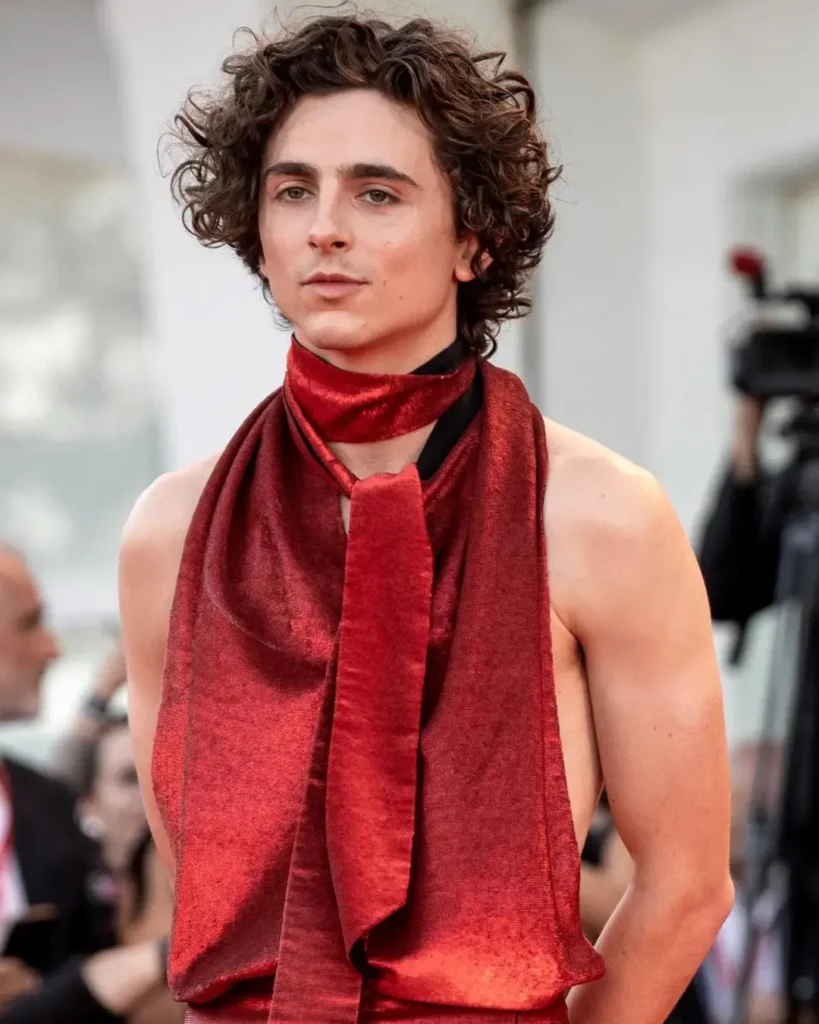
Who Is Timothée Chalamet?
Timothée Hal Chalamet was born on December 27, 1995, in New York City, to a French father and an American mother who worked in real estate and had a background in professional dance. That mixed heritage isn’t just trivia — it’s part of why Chalamet has always felt a little different from the typical American leading man: equal parts French arthouse sensibility and New York theater-kid intensity.
And theater kid is genuinely where it started. He was performing off-Broadway by age eight, in a production of Les Liaisons Dangereuses, and later trained at LaGuardia High School — the real-life “Fame” school — before most people his age had even picked a college major. It’s the kind of background that explains why he’s never quite read as a typical movie star. He reads more like someone who happened to become one.
His first on-camera credit came in a 2009 episode of Law & Order, the kind of blink-and-you-miss-it role most actors have buried somewhere in their early résumé. Nobody watching that episode had any idea what was coming.
The Breakthrough Nobody Saw Coming
If you ask most people when they first noticed Timothée Chalamet, the answer is almost always the same: Call Me by Your Name (2017). Made on a modest budget and shot mostly in northern Italy, the film turned into a genuine cultural moment — and turned Chalamet, at just 22, into the third-youngest Best Actor Oscar nominee in Academy history. That’s not a small thing. That’s the kind of nomination that changes the entire trajectory of a career overnight.
What’s easy to forget now is how much of a risk that role actually was for a young actor trying to build a career. It was intimate, emotionally raw, and not remotely the safe, broad, crowd-pleasing choice a rising star is “supposed” to make. Chalamet made it anyway, and it paid off in a way few debuts ever do.
From Arthouse Darling to Blockbuster Lead
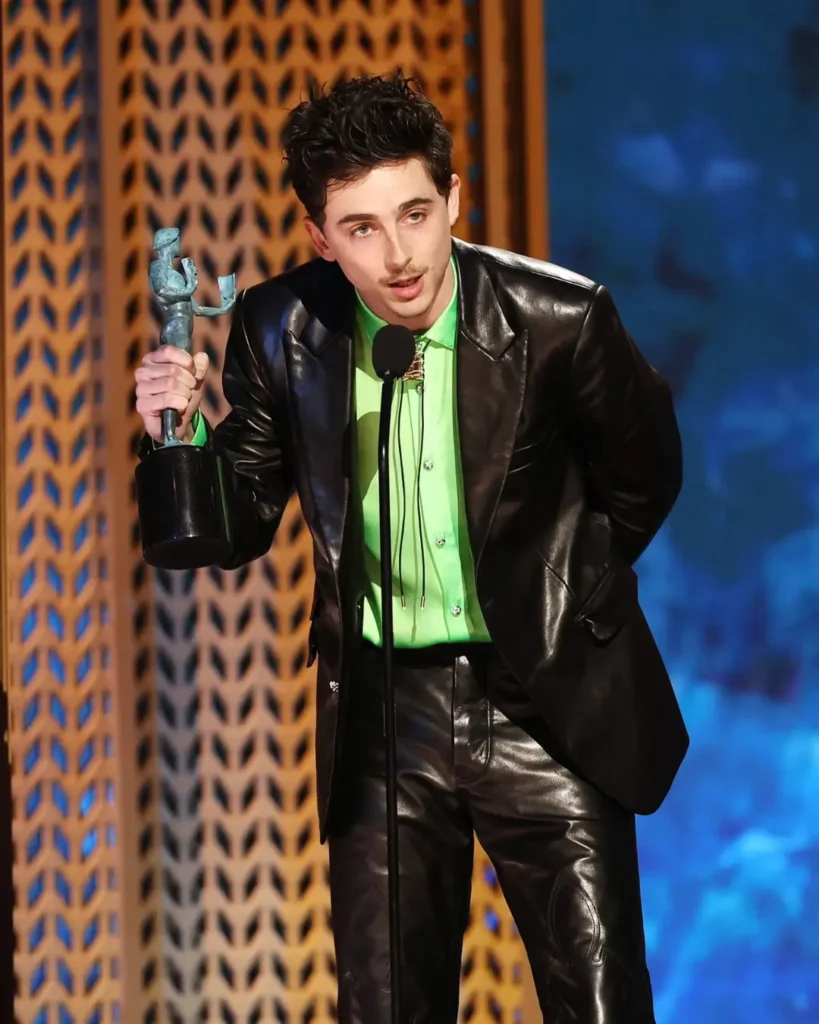
What happened next is honestly the more impressive part of the story. A lot of actors who break out in a prestige indie either get typecast in that lane forever, or they overcorrect hard into big franchise work and lose whatever made them interesting in the first place. Chalamet somehow avoided both traps.
He took supporting turns in Christopher Nolan’s Interstellar early on, then kept alternating between smaller, riskier films (Beautiful Boy, The King, Lady Bird) and increasingly massive studio bets. The biggest of those bets was Denis Villeneuve’s Dune — a role Villeneuve has said he chose Chalamet for specifically because audiences needed to believe this young man could convincingly grow into someone capable of leading an entire planet. That’s a lot to put on one actor’s shoulders, and Dune (2021) delivered, grossing over $400 million worldwide. Its sequel, Dune: Part Two, more than doubled that.
Somewhere in between, he also played Willy Wonka in Wonka (2023) and Bob Dylan in A Complete Unknown — two roles that could not be more different from each other, which is sort of the whole point with Chalamet. He doesn’t seem interested in being any one type of star.
By 2026, at age 30, he’d become the youngest male actor since Marlon Brando to land three Best Actor Oscar nominations — a genuinely rare career marker, and one that puts him in company most actors never get close to, regardless of age.
The Advice That Shaped His Career Choices
Chalamet has talked before about early advice from someone he considers a personal hero, who told him, in short: skip the hard drugs, skip the superhero movies. It’s a throwaway-sounding line, but looking back at his filmography, it’s clearly stuck. In a decade where almost every young leading man eventually ends up in a cape, Chalamet simply never did — and that restraint is a big part of why his career still reads as curated rather than opportunistic.
He’s also been refreshingly candid about how uncomfortable the “movie star” label itself makes him, once describing the phrase as something that felt almost suffocating to hear applied to himself. It’s a strange thing to admit for someone whose face is on magazine covers worldwide, but it tracks with everything else about him — an actor who seems genuinely more interested in the work than the persona that comes with it.
Timothée Chalamet Net Worth 2026

So, the number everyone actually clicked on this article for: as of 2026, Timothée Chalamet’s net worth is most commonly estimated at around $25–30 million, according to widely cited figures from Celebrity Net Worth. Some more recent estimates put the number meaningfully higher, closer to $35 million or more, once you factor in his newest paydays.
And those new paydays are substantial. He reportedly commanded a $25 million salary for the Paramount heist film High Side — making him one of the youngest actors in Hollywood history to command that kind of single-picture payday, a bracket that previously belonged to names like Jennifer Lawrence. On top of that, his ambassador deal with Chanel’s Bleu fragrance line was reported to be worth around $35 million on its own — more, by some estimates, than the combined salaries of every film he’d made up to that point.
Here’s what that really tells you: Chalamet’s income isn’t just “actor money” anymore. It’s brand money layered on top of movie-star money, which is a very different, much more durable kind of wealth. Box office grosses fluctuate. Fragrance ambassador contracts and luxury brand deals tend to be a lot more stable — and a lot more lucrative over time.
Where the money comes from:
- Film salaries (Dune franchise, Wonka, A Complete Unknown, High Side, and upcoming Dune: Part Three)
- Backend/box-office bonus participation on major hits
- Brand partnerships, most notably his Chanel Bleu ambassadorship
- Awards-season endorsement value and media appearances
Career Highlights at a Glance
- 2017 — Call Me by Your Name breakout role; first Oscar nomination at age 22
- 2021 — Leads Dune, grossing over $400 million worldwide
- 2023 — Stars as the title character in Wonka
- 2024 — Dune: Part Two becomes his biggest box office hit to date
- 2025 — Portrays Bob Dylan in A Complete Unknown, earning further awards buzz
- 2026 — Becomes youngest actor since Marlon Brando with three Best Actor nominations; signs record-setting Chanel Bleu deal; Dune: Part Three on the way
Our Honest Take
What makes Chalamet genuinely interesting to watch, at least from where we’re sitting, isn’t just the box office numbers or the brand deals — it’s how deliberately unbothered he seems by the version of stardom most people would have pushed him toward. He could have chased the safest, highest-grossing path years ago. Instead, he kept choosing weird, risky, sometimes uncomfortable roles, and the industry kept rewarding him for it anyway. That’s a rarer combination than the net worth headlines make it look.
FAQ
Born December 27, 1995, Chalamet turned 30 in 2025 and remains 30 through most of 2026
Most widely cited estimates place his net worth around $25–30 million, though some recent estimates suggest it may now be closer to $35 million or higher following his Chanel deal and High Side salary.
His role as Elio in Call Me by Your Name (2017) is widely considered his breakout, earning him his first Academy Award nomination at age 22.
As of 2026, he has not won, but he holds three Best Actor nominations, making him the youngest actor since Marlon Brando to reach that milestone.
Read More:
The Most Unexpected Celebrity Couples in Pop Culture History
Weirdest Celebrity Outfits of 2026 (So Far) — Ranked
Leonardo DiCaprio’s Dating History: Every Woman He’s Loved, Lost, and Left Before 25