
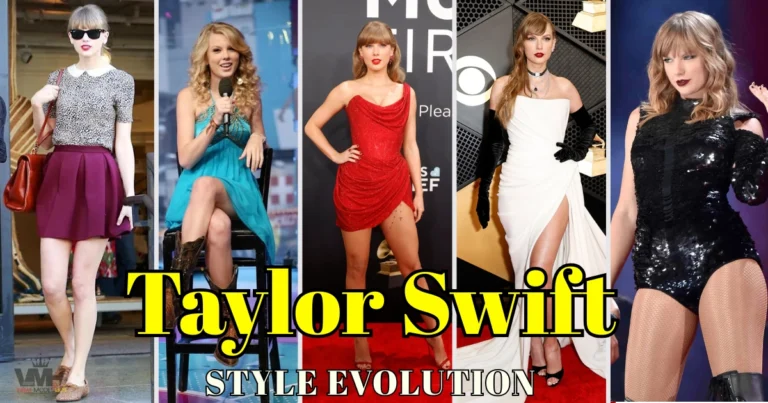
Twenty years ago, Taylor Swift stepped onto a Nashville stage in a sundress and cowboy boots, curly hair bouncing under the lights. Today, she’s one of the most photographed style icons on the planet, with entire fashion essays written about a single sequined bodysuit. Her wardrobe hasn’t just changed — it’s told the story of her career, era by era, outfit by outfit.
Here’s the complete breakdown of how Taylor Swift’s style evolved from country ingenue to global fashion authority, and what each transformation says about the artist behind it.
Debut Era (2006–2008): The Girl-Next-Door Years
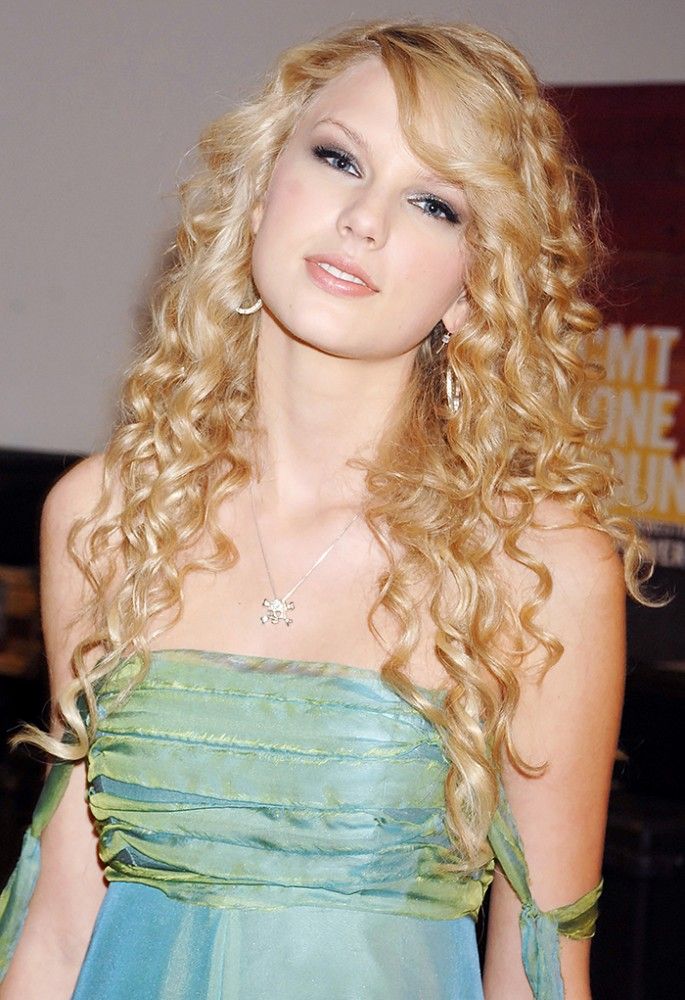
Taylor’s earliest public style was unmistakably country-pop: flowing sundresses, cowboy boots, and long, defined curls that became her signature. Colors leaned soft and pastel, silhouettes were modest and flowy, and the overall look was designed to feel approachable—a teenager from Pennsylvania who’d made it to the Grand Ole Opry, not a manufactured pop star.
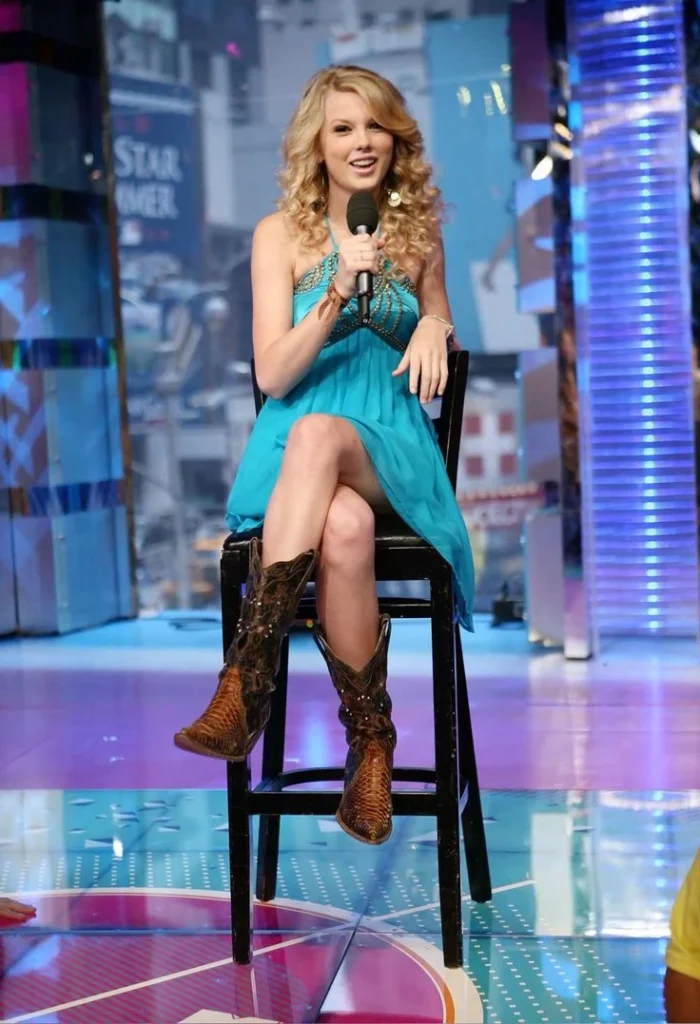
This era set the template that made her relatable to a young fan base, and it’s the look most casual fans still associate with her earliest hits.
Signature pieces: sundresses, cowboy boots, sparkly belts, curled hair
Fearless Era (2008–2010): Sequins Meet Sincerity
As Taylor’s fame exploded, her style started to embrace more sparkle—literally. Fringe dresses, sequins, and metallic fabrics entered the rotation, paired with the same natural curls. This was the era of award-show gowns in soft golds and blues, still girl-next-door at heart but with noticeably higher production value.
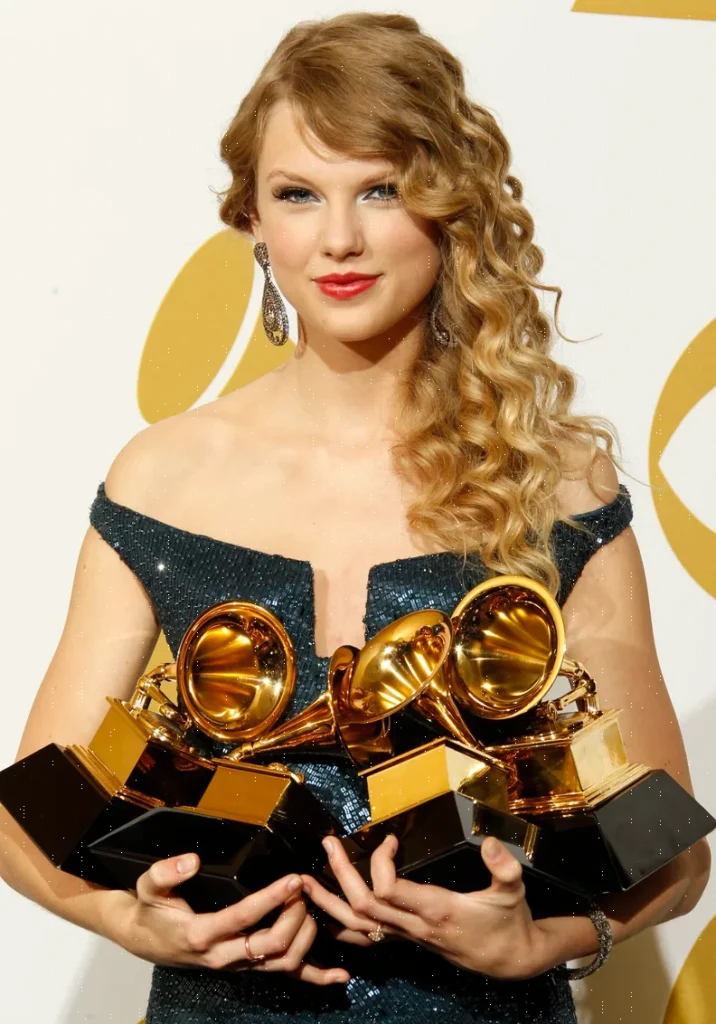
Signature pieces: sequined mini dresses, fringe details, metallic gowns
Speak Now Era (2010–2012): Fairy-Tale Glamour
Speak Now leaned into a more theatrical, romantic aesthetic—think ball gowns, purple hues (a color she’d return to often), and an almost storybook quality to red-carpet looks. This is arguably the most “princess” chapter of her style history, matching the diary-entry intimacy of the album itself.
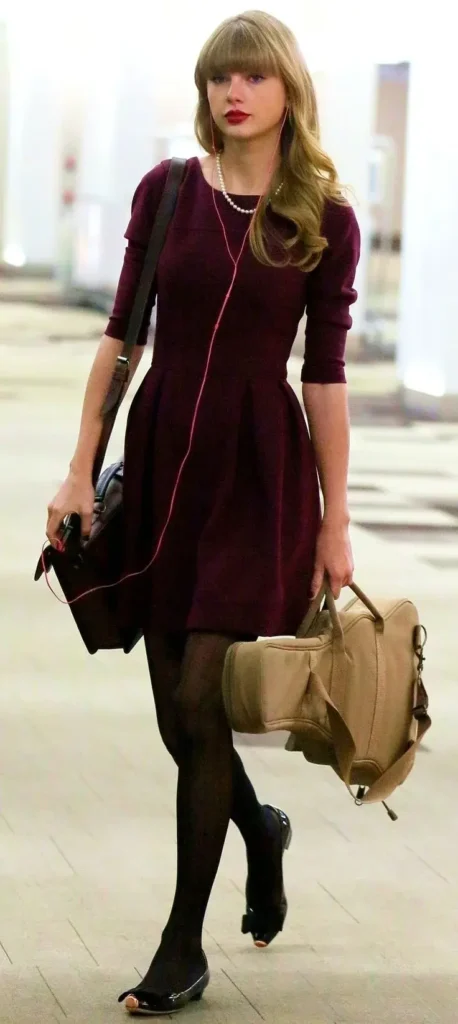
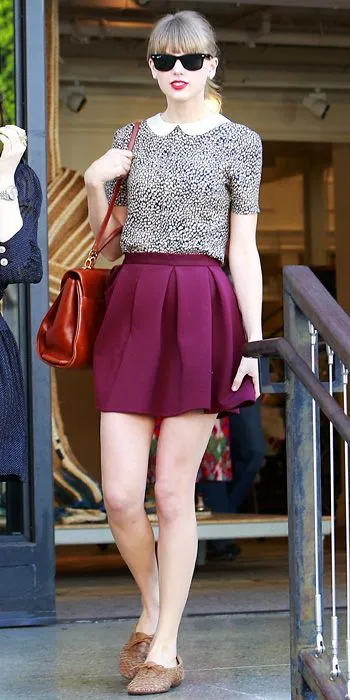
Signature pieces: ball gowns, jewel tones, romantic updos
Red Era (2012–2014): The Turning Point
Red marks the first real style pivot. The red lip became a permanent signature here, and her silhouettes started tightening—more tailored dresses, more structured outerwear, and a visible move away from country-sweetheart softness toward something sleeker. Hair got straighter. Looks got bolder.
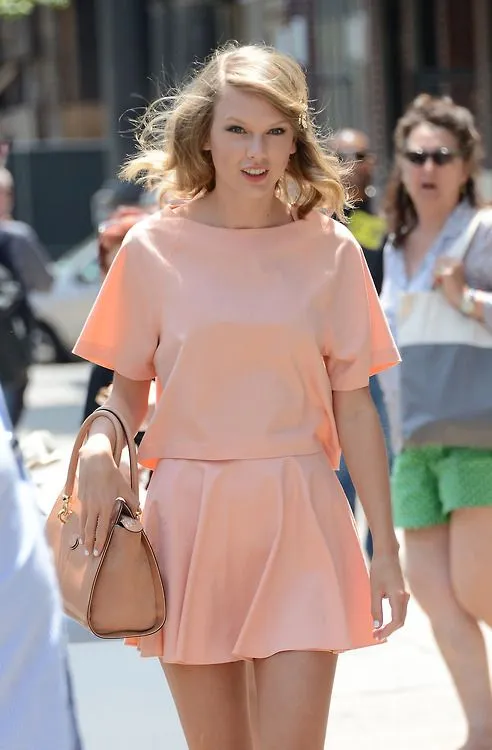
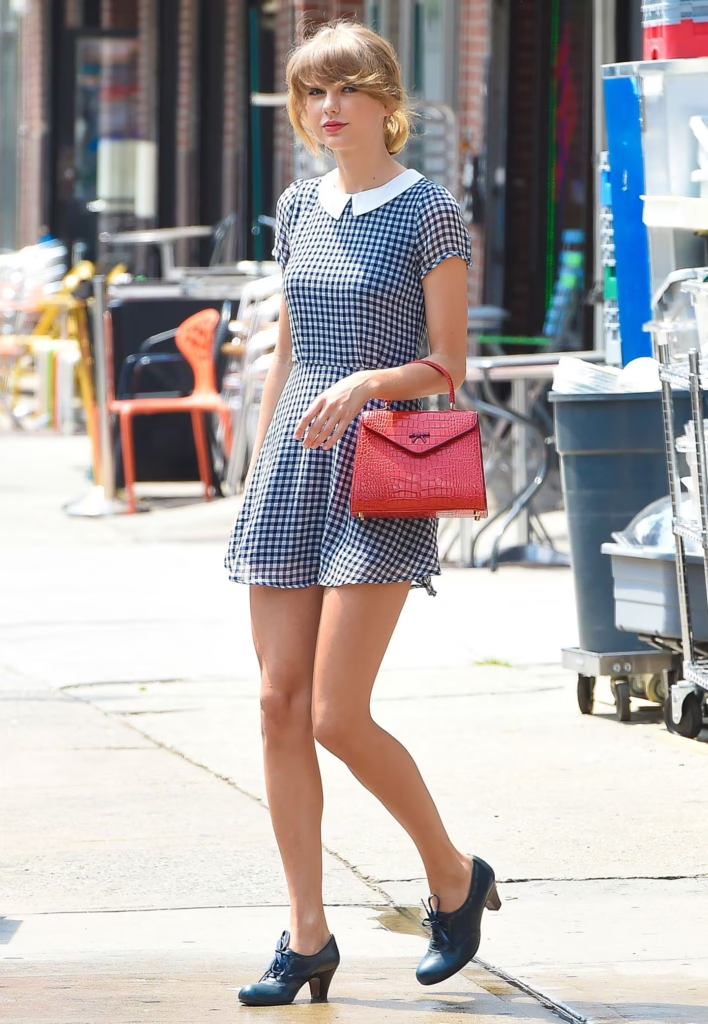
This era is the hinge between “country star” Taylor and “pop star” Taylor, and the wardrobe reflects that transition in real time.
Signature pieces: red lipstick, tailored coats, structured dresses
1989 Era (2014–2016): The Style Reinvention
If any era rewrote the Taylor Swift fashion rulebook, it’s 1989. The curls were gone, replaced by a sleek bob. Sundresses gave way to crop tops, high-waisted skirts, and minimalist monochrome outfits inspired by her adopted home base of New York City. This was Taylor as a full-fledged pop and style icon—cleaner lines, more editorial styling, and looks clearly built for street-style photographers as much as red carpets.
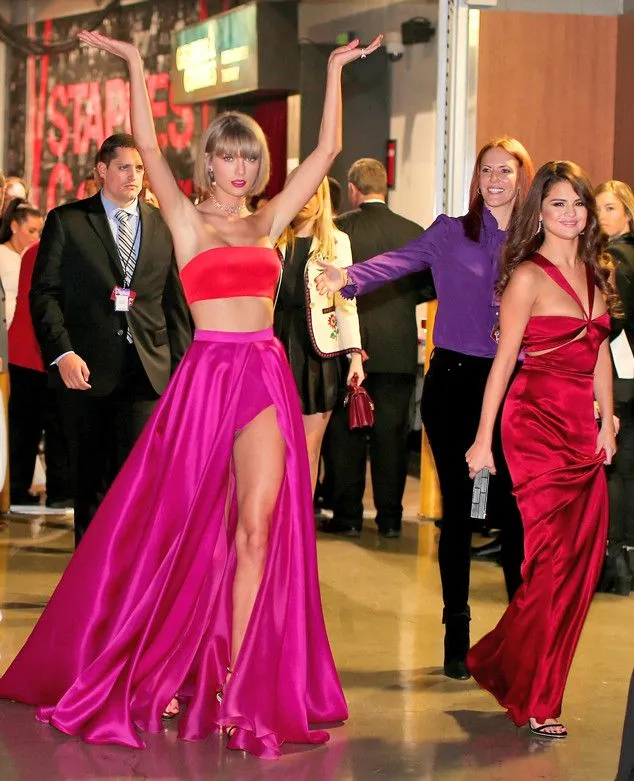
Signature pieces: the bob haircut, crop tops, monochrome outfits, statement sunglasses
Reputation Era (2017–2018): All Black Everything
Reputation was a deliberate image overhaul, and the wardrobe followed suit. Nearly the entire era was styled in black—leather, snake-print, dramatic tailoring, and a much edgier, more armored aesthetic than anything she’d worn before. This was Taylor reclaiming a narrative through fashion: dark, unapologetic, and visually aggressive compared to every prior era.
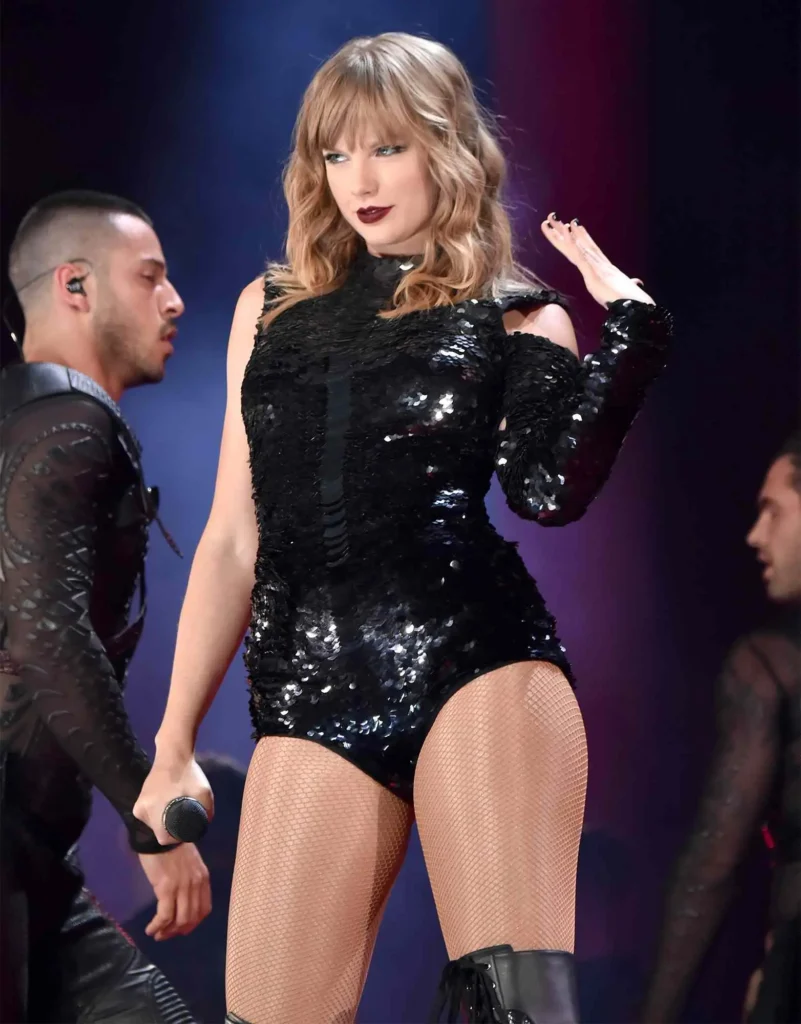
Signature pieces: all-black outfits, leather, snake motifs, bold eyeliner
Lover Era (2019–2020): Pastel Maximalism
A hard swing back toward color and softness, Lover brought pastels, sequins, butterflies, and a joyful, almost candy-coated maximalism. Where Reputation was armor, Lover was celebration—bright, playful, and visually loud in a completely different way.
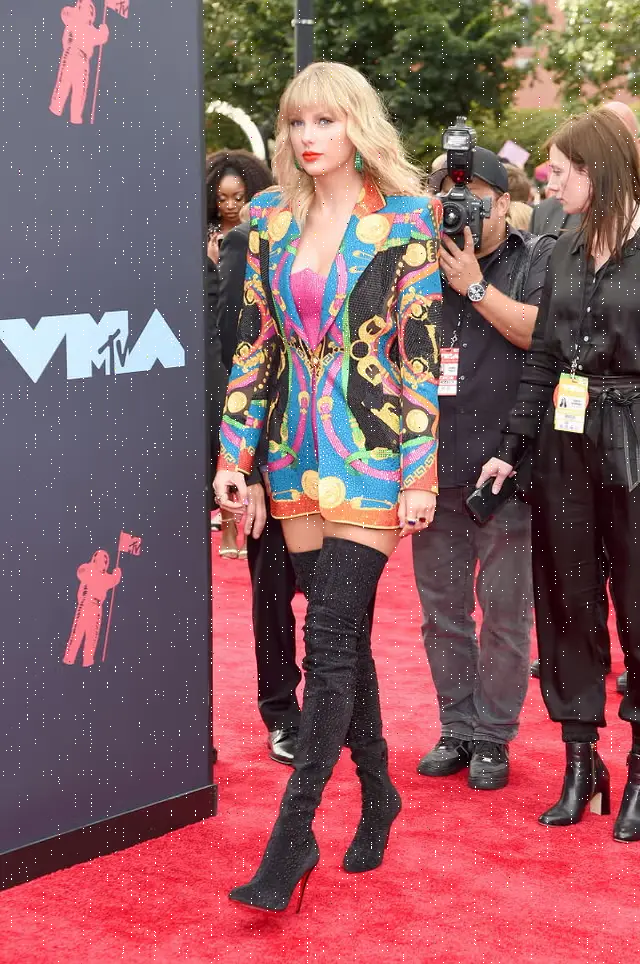
Signature pieces: pastel sequins, butterfly motifs, colorful separates
Folklore & Evermore Era (2020–2021): Cottagecore Minimalism
The pandemic-era albums brought the most stripped-back aesthetic of Taylor’s career: oversized cardigans, muted earth tones, minimal makeup, and loose, natural waves. This era proved her style could carry a mood shift as effectively as her music did—trading spectacle for quiet, literary intimacy.
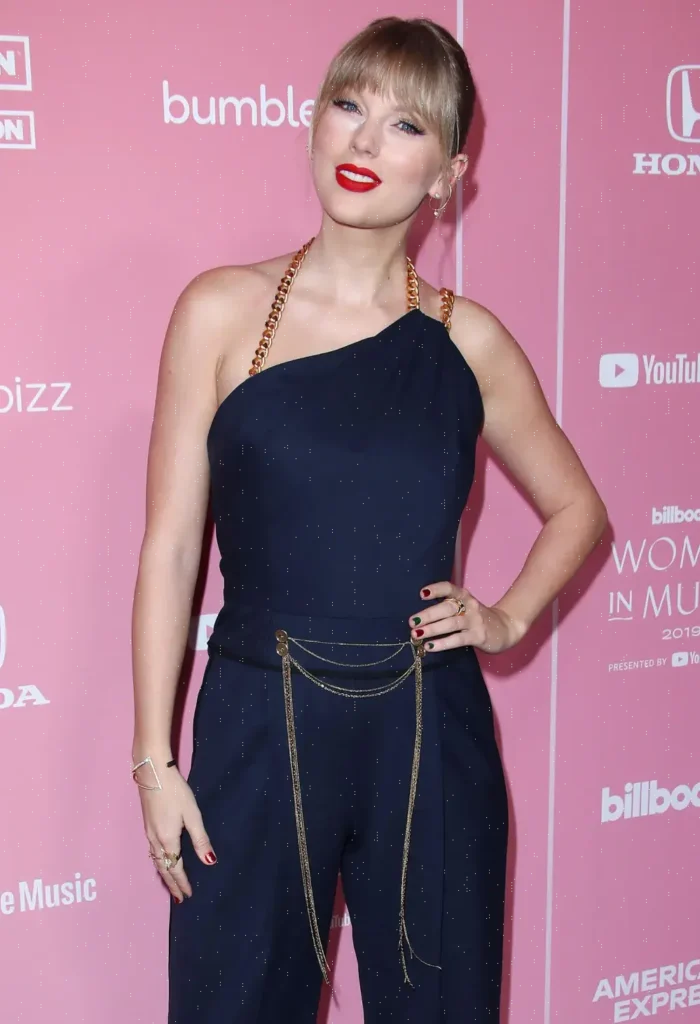
Signature pieces: cardigans, flannel, muted neutrals, no-makeup makeup
Midnights & Eras Tour Era (2022–2024): Maximalist Spectacle
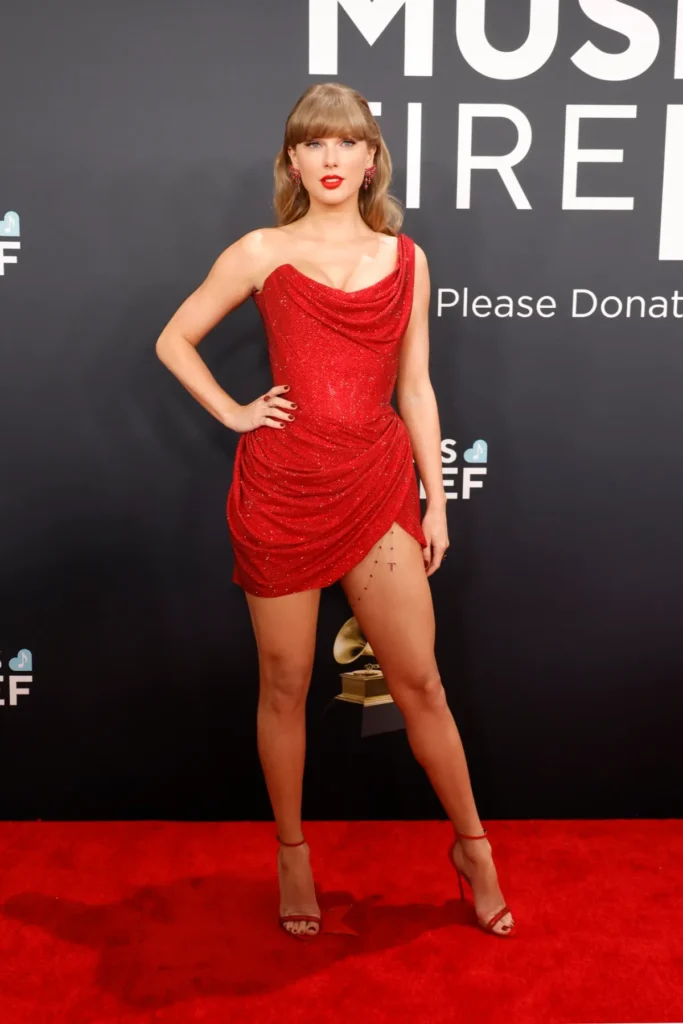
With the Eras Tour, Taylor’s style became a literal recap of every previous era, remixed for the stage: bespoke bodysuits, fringe, sequins, and rotating designer collaborations for each album segment of the show. Off-stage, her red-carpet looks leaned toward sharp, statement-making designer gowns, reflecting both her billionaire status and her increasingly close relationships with major fashion houses.
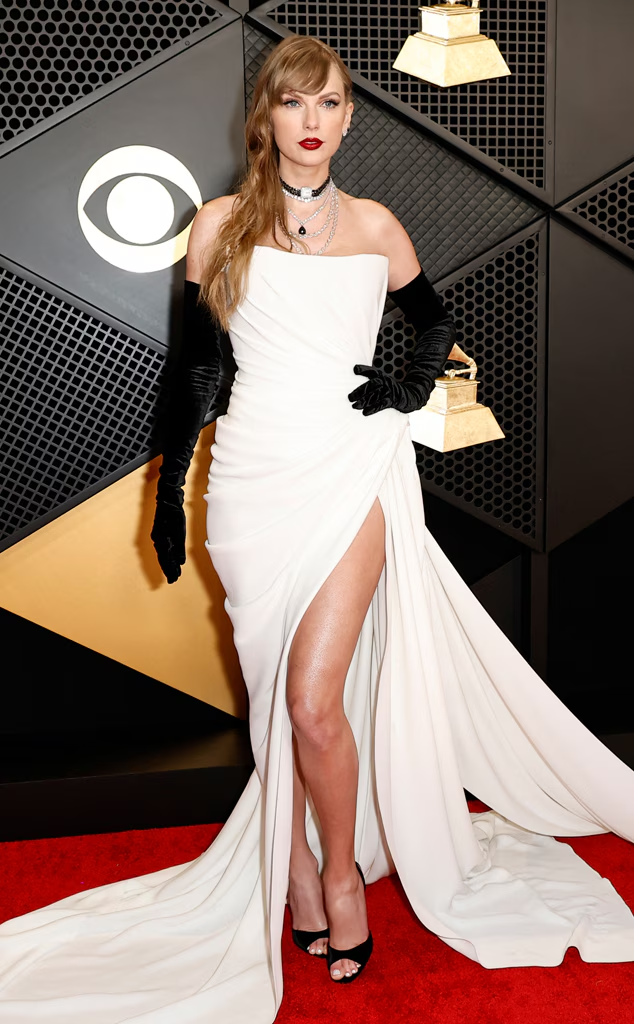
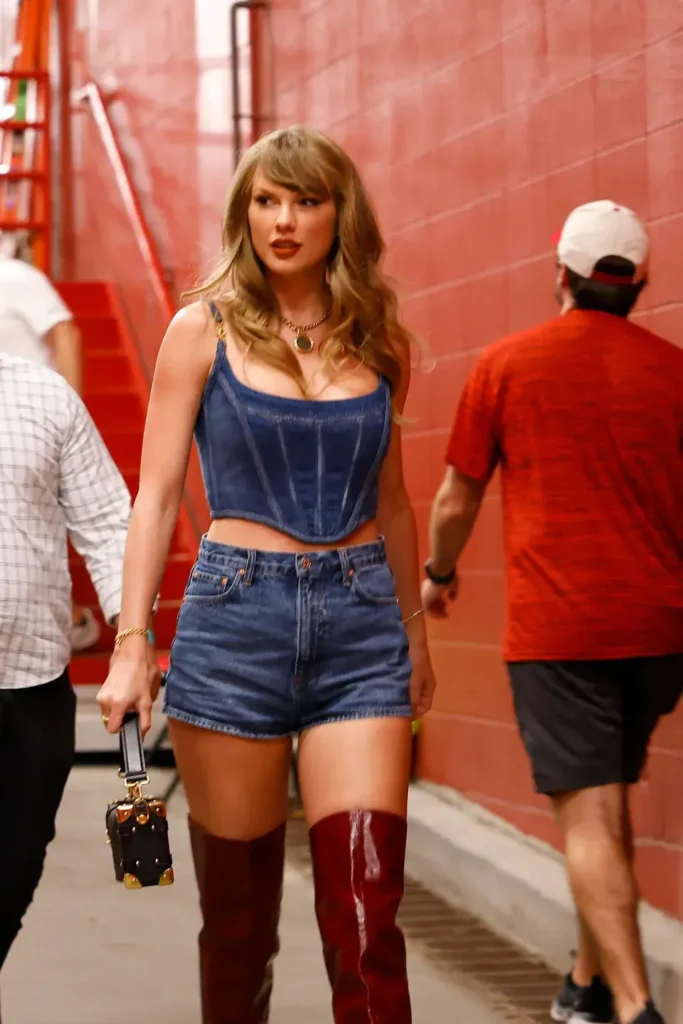
Signature pieces: custom bodysuits, fringe, designer gown collaborations
Read More: Taylor Swift seen tipping some workers at the Grammys afterparty.
Current Era (2025–2026): The Established Icon
Today, Taylor’s style operates less like a costume for an album cycle and more like an established personal brand: tailored, editorial, designer-forward, and confident enough to reference earlier eras without being defined by any one of them. She’s as likely to appear in a minimalist tailored suit as in a maximalist gown, reflecting an artist who has, fashion-wise, arrived rather than transformed.
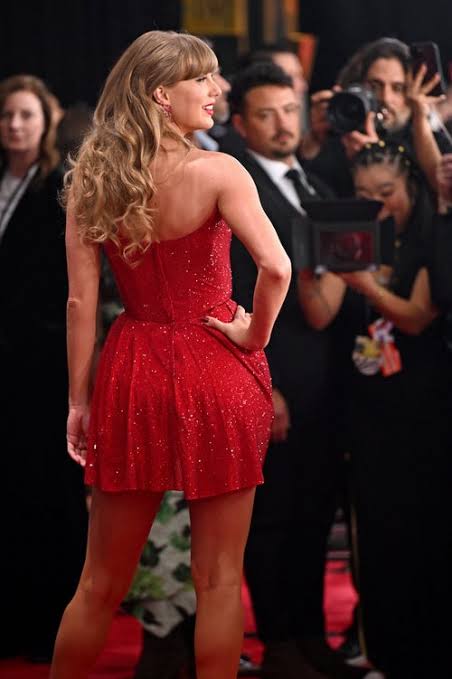
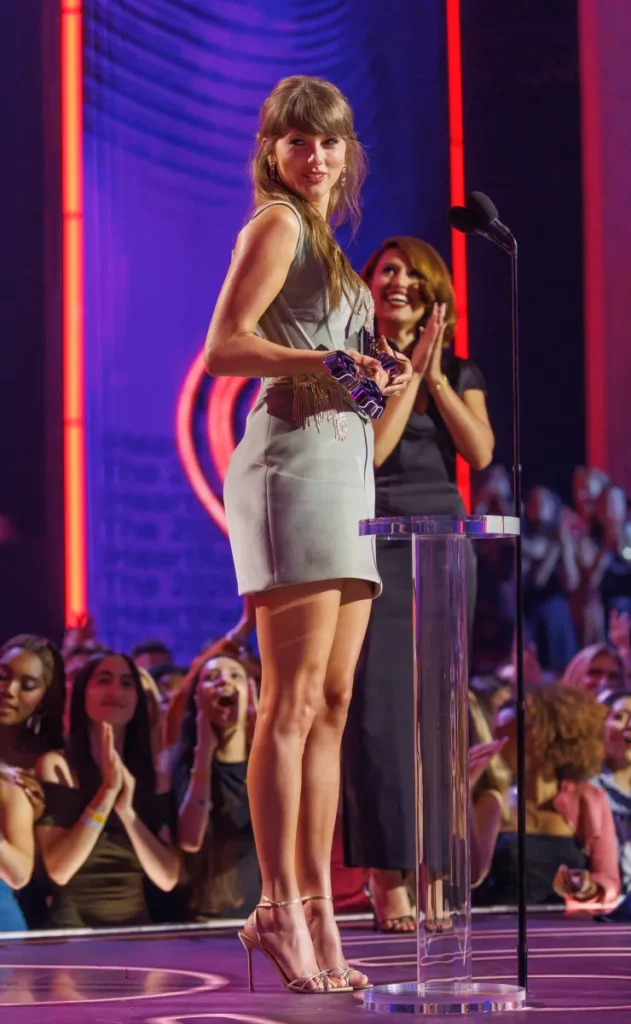
Signature pieces: tailored suiting, statement designer gowns, era-blending red carpet looks
What Her Style Says About Her Artistic Reinvention
Taylor Swift’s fashion timeline isn’t incidental—it’s one of the most consistent visual through-lines in modern pop culture. Each album era comes with a near-total aesthetic reset: hair, color palette, silhouette, and mood all shift together. Few artists use style this deliberately as a storytelling device, which is part of why her wardrobe choices generate as much discussion as her lyrics.
Read More: Taylor Swift Net Worth 2026—How She Became a $2 Billion Dollar Icon
FAQ
What was Taylor Swift’s most iconic outfit? Fans and stylists most often point to her Reputation-era all-black leather looks or her 1989-era crop-top-and-skirt combinations as the most era-defining outfits of her career.
Who styles Taylor Swift? Taylor has worked with a rotating team of stylists over the years rather than a single long-term stylist, with looks often custom-built by major fashion houses for specific eras and tours.
How has Taylor Swift’s style changed since 2006? She’s moved from soft, country-inspired sundresses and curls to a much more editorial, designer-driven wardrobe—with distinct visual resets tied to each album era, culminating in the maximalist, career-spanning aesthetic of the Eras Tour.