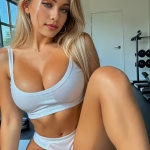
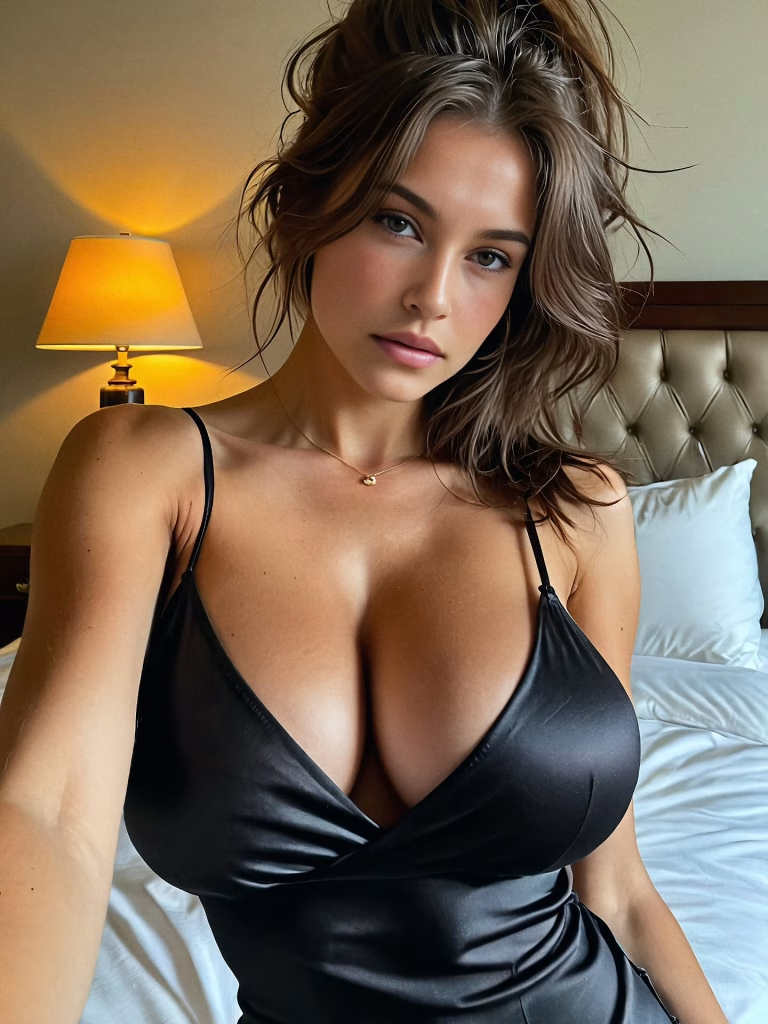
In the last few years a new kind of celebrity has quietly claimed a corner of Instagram: the virtual influencer. One of the most talked-about names in that space is Sierra Vexley — an account that looks, at first glance, like a conventional fashion model’s feed but, on closer inspection, sits at the intersection of photography, 3D art, and artificial intelligence. This post unpacks who Sierra Vexley appears to be, how she rose to prominence, what she represents for fashion and digital culture, and why virtual models matter now more than ever.

A digital presence that looks strikingly real
Open Sierra Vexley’s Instagram and you’ll find highly produced images, glossy portraits, and short reels that mirror the aesthetic of mainstream fashion influencers: polished skin, lush hair, fashion-forward outfits, and editorial-style poses. The account has attracted a substantial audience, drawing tens of thousands of followers and frequent uploads — a level of visibility that puts a virtual persona into the same public arena as human influencers.
That slick, magazine-ready quality is part of the appeal. The images read like the best of high-end retouching and 3D rendering combined, and they invite two simultaneous reactions: admiration for the beauty and a creeping curiosity about the person behind the portrait. Is Sierra Vexley a real person, a CGI creation, or a hybrid brand persona? Across the web, many outlets and video explainers present her as an AI-generated or virtual model — a synthetic persona crafted to look and perform like an influencer.
How Sierra “arrived”: speed, visuals, and viral curiosity
Virtual influencers tend to grow fast when their visual design hits a niche: evocative beauty, a distinctive aesthetic, or a persona that taps into contemporary fantasies about perfection and fantasy-realism. Sierra’s profile rose to attention through the same viral mechanics that benefit human creators: curated posts, shareable reels, and cross-posting into fashion and AI-focused channels that amplify the novelty of a photoreal-looking figure that’s supposedly synthetic. Several YouTube channels and “bio” videos have profiled her, framing Sierra as part of the new wave of AI models who are “taking Instagram by storm.”
Crucially, virtual accounts like Sierra’s can post images that would be costly or logistically difficult for human creatives — imagine instant wardrobe changes, impossible lighting scenarios, or hyper-stylized edits that are quicker to render than organize on set. That flexibility gives virtual models an edge for visually-first platforms.
The mechanics behind the magic (what we can reasonably infer)
Public-facing accounts rarely publish a full “making-of” for every image, so much of what we infer about Sierra’s creation comes from how people in the industry build virtual influencers. Typically, virtual models are the product of layered pipelines: concept design, 3D sculpting or generative image models, texture and lighting passes, and heavy retouching or neural upscaling. Teams of artists, coders, and social managers often work together to produce a consistent persona and content calendar.

For Sierra specifically, the most reliable public signals are the finished posts themselves and third-party profiles and explainers that label her as an AI or virtual model. Multiple creators and channels have described her that way, and her visual outputs are consistent with advanced digital rendering or AI-assisted image generation. While the exact tools or artists behind her content are not always disclosed publicly, the result is unmistakably engineered.
Why Sierra Vexley matters: three cultural fault lines
1. Authenticity and disclosure. Virtual models blur the line between promoted content and artifice. If audiences assume an influencer is a real person, branded content or endorsements could create confusion. That’s why some experts insist on clear labelling when content is generated by AI — transparency helps the public distinguish between human creators and synthetic digital assets. Several commentary videos and write-ups about Sierra highlight this transparency issue repeatedly. YouTube
2. Representation and standards of beauty. Virtual models can be crafted to conform to idealized proportions and lighting that human skin and bodies rarely achieve unedited. That raises questions about whether virtual icons will reinforce unrealistic beauty standards — or, alternatively, offer opportunities for representation that human fashion has historically resisted (for instance, showcasing different body types, ethnic aesthetics, or nonbinary designs that don’t rely on human constraints).
3. Economic and industry shifts. As virtual models become more sophisticated and acceptable in marketing, brands may experiment with digital-only campaigns, virtual try-ons, and metaverse integrations. This could create new business models (like digital clothing or NFT drops) but also pressure traditional model labor markets. Sierra is often cited in discussions about how fashion’s economics might shift in the near future.
Controversies and the conversation online
Virtual influencers provoke polarized responses. Some viewers celebrate the artistry and forward-looking possibilities; others criticize the ethical and social implications. Common critiques include:
-
Lack of transparency: When virtual personas are presented without clear disclosure, audiences may feel misled.
-
Impact on jobs: Digital models could reduce demand for human talent for certain types of shoots or campaigns.
-
Perpetuation of an ideal: Overly idealized synthetic beauty might exacerbate body-image concerns.
These critiques are part of a broader debate about how technology should be deployed in media. For Sierra Vexley — who receives coverage across explainer channels and fashion compilations — the debate is visible in comment threads, video breakdowns, and feature videos that examine her status and the consequences of digital beauty. YouTube
The future: where virtual models could go next
Virtual personas like Sierra Vexley are still experimenting with commercial roles. The next frontier likely includes:
-
Branded virtual campaigns where digital models represent clothing lines or accessories that exist both physically and as 3D assets.
-
Augmented reality try-ons that let consumers “wear” virtual garments on their own bodies.
-
Interactive avatars in metaverse spaces, games, or virtual events where the line between marketing and entertainment blurs.
Sierra’s polished aesthetic makes her a natural candidate for such roles; whether she evolves into a platform-spanning brand or remains primarily an Instagram phenomenon will depend on audience appetite and how openly the creators behind her commercialize the persona. YouTube
Final thoughts: more than a novelty
Sierra Vexley is part of a new avant-garde of digital personas that force us to confront how we define influence, authenticity, and artistry online. While she may not be human in the traditional sense, the cultural work she performs — sparking debate, fueling creative explorations, and pushing fashion toward new technologies — is very much real.
If you’re watching the evolution of digital culture, Sierra is a name worth following. Her feed provides a case study in how aesthetics, tech, and marketing converge online — and how audiences react when beauty is designed rather than born.
Read More:
Hailey Hayes: From Instagram Newcomer to Rising Model Sensation
Brittney “The Real Brittfit”: From Gym Floors to Social-Media Spotlight
Aiko Kim (@aikokimxo): The Nurse-Turned-Creator Rewriting the Playbook on Modern Internet Stardom